Teaching and Learning Showcase 2026 · The recap
Learning through doing.
Growing through connection.
Two days of shared practice, creative experimentation and conversations about what it means to learn — and teach — at ANU.
10–11 September 2026 | Marie Reay Teaching Centre, ANU
Slides & resources
- Danny Liu’s keynote slides (PDF)
- Merryn McKinnon’s AI Working Group slides (PDF)
- Samira Nazar’s slides (PDF)
- John Debs’ slides (PDF)
- Thomas Biedermann’s slides (PDF)
- Adam Piggott’s slides (PDF)
- William Lim’s slides (PDF)
- Wai-Man (Raymond) Liu’s slides (PDF)
- Stephen Dann’s slides (PDF)
- Krisztina Valter and Elisa Crossing’s slides (PDF)
- Yujie Zhu’s slides (PDF)
- the McCusker Institute slide (PDF)
- Ann Smith’s slides (PDF)
- Safiya Okai-Ugbaje’s slides (PDF)
- Marina Iskhakova’s slides (PDF)
- Pedagogy panel — Petra Vaiglova, Tatiana Burr, Wayne Morgan and Rachel Rodney-Harris (PDF, 46.2 MB)
- The Popsicule website
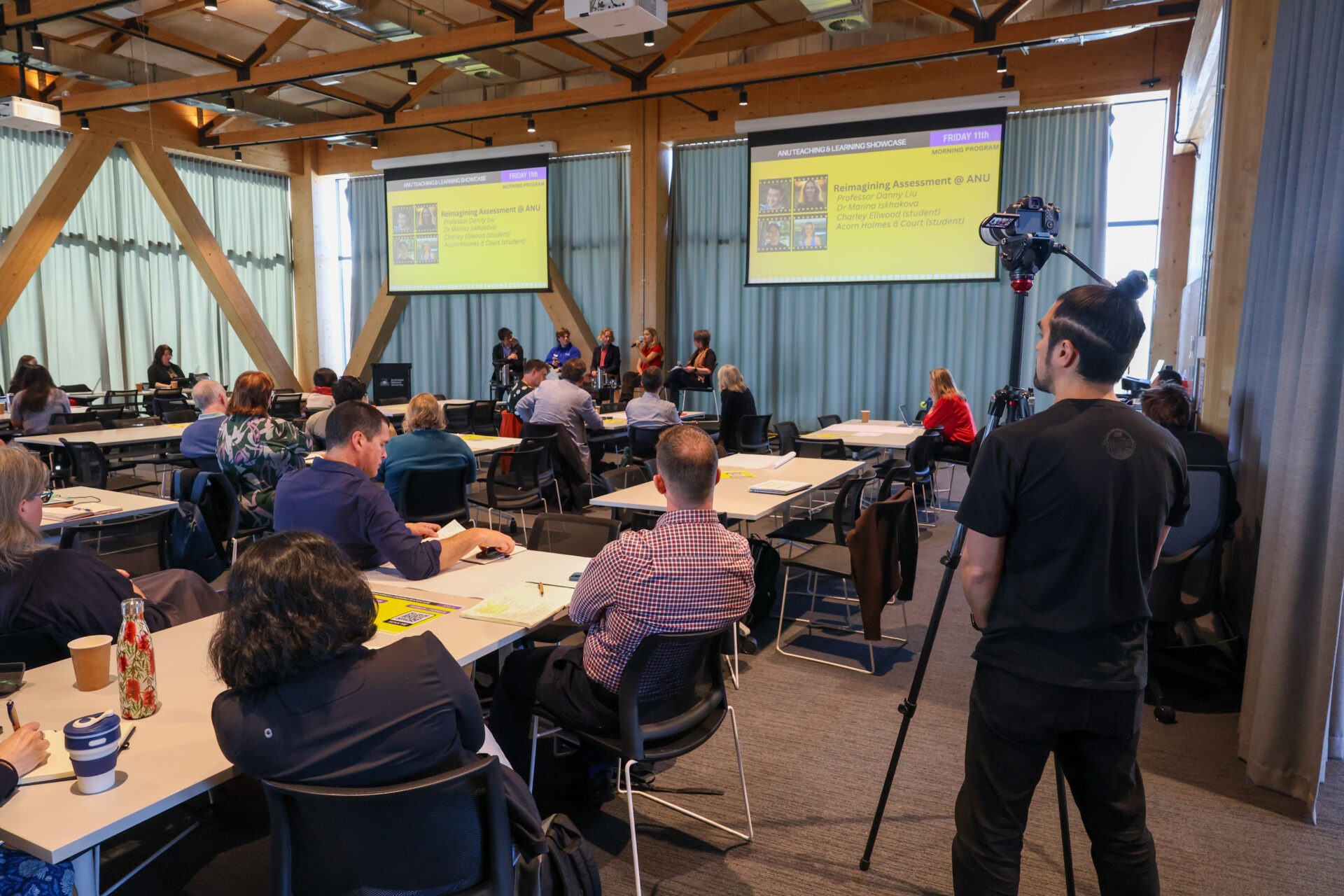
What do we want students to know, do and become? That question connected the 2026 Teaching and Learning Showcase, from hands-on workshops and classroom case studies to conversations about assessment in an age of AI.
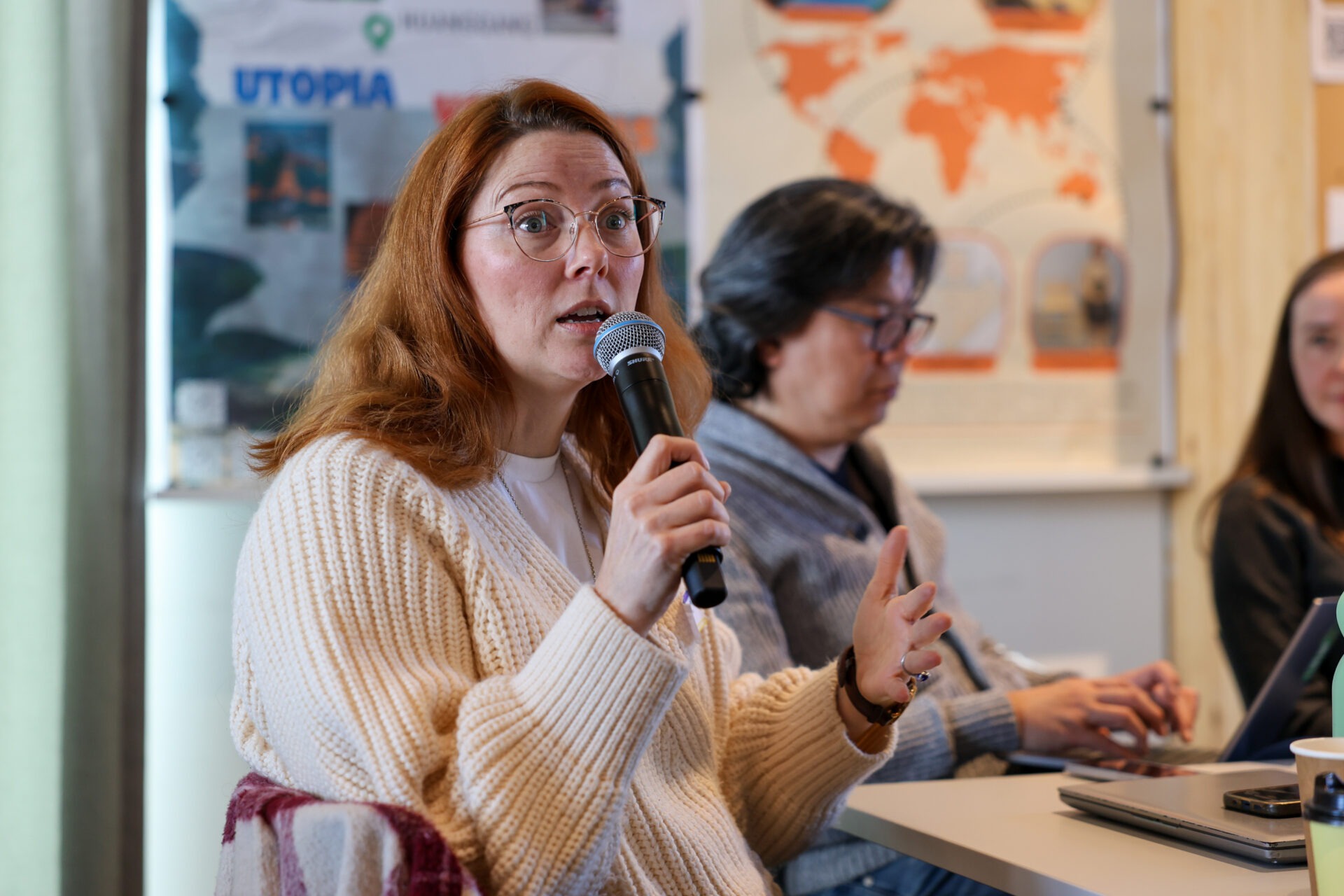
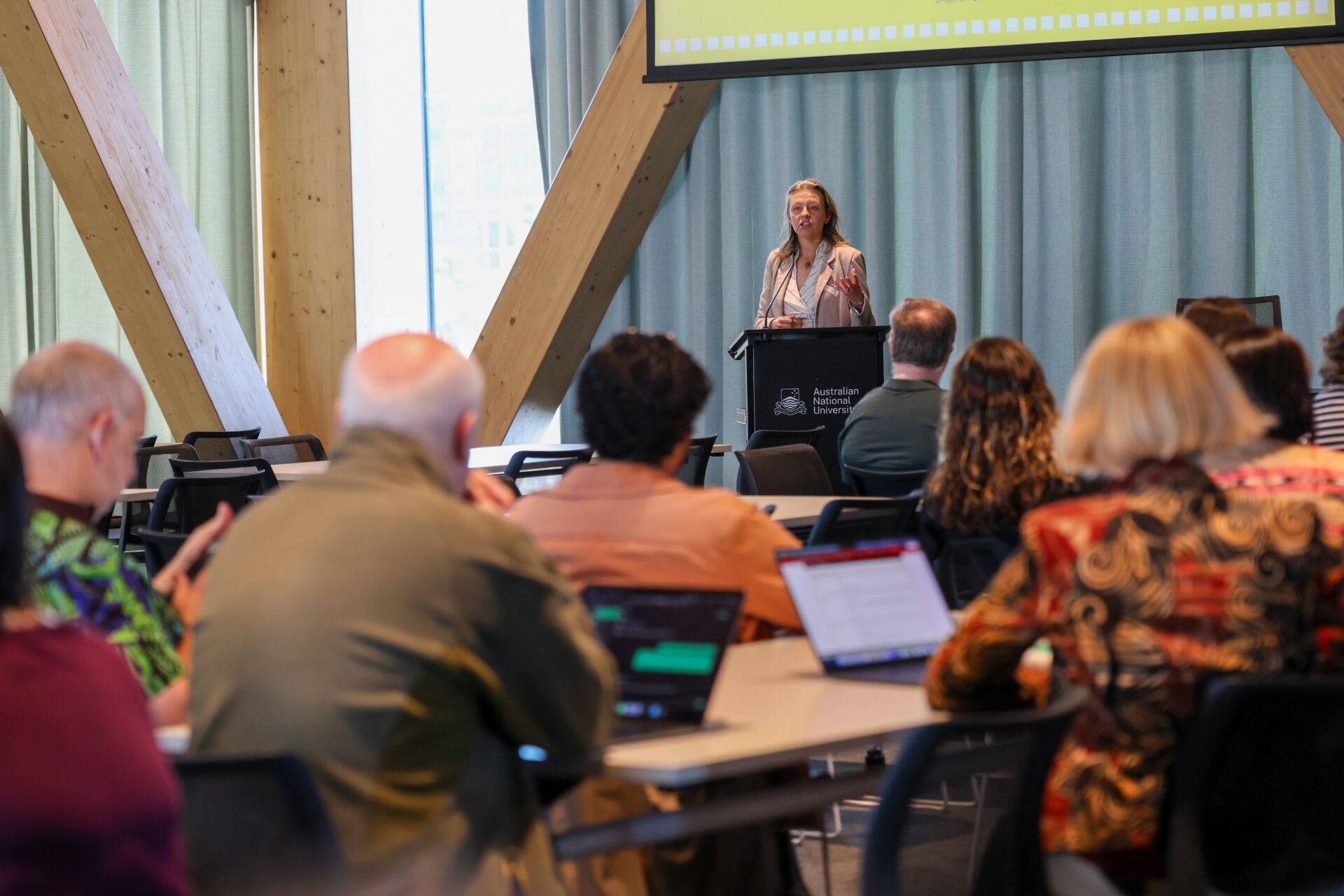
Across two days, educators, professional staff and students explored how to make learning more purposeful, participatory and connected. Hosted and MC’d by Professor Merryn McKinnon, the Showcase made space for honest accounts of teaching: the experiments that opened new possibilities, the practical barriers that remain, and the support needed to turn promising ideas into everyday practice.
The energy in the room
Two days, in 50 seconds
Revisit the rhythm of the Showcase through this short timelapse of the event space.
50 seconds · Watch on Vimeo
01 / PARTICIPATION
Make learning something students do
Experiments, creative projects, simulations and real-world partnerships gave students opportunities to test ideas and learn from uncertainty.
02 / PROCESS
Make thinking visible
Dialogue, reflection and feedback helped reveal how students reached an answer, what they understood and where they needed to go next.
03 / CONNECTION
Build a community for learning
Trust, belonging and collaboration connected students with educators, peers, disciplines and the world beyond the classroom.
A central conversation
Rediscovering education in an age of AI
Professor Danny Liu from the University of Sydney invited participants to return to the purpose of education. If AI can produce a polished answer quickly, how do we protect the thinking, effort and reflection through which students develop their own capabilities?
His stairs-and-escalator analogy captured the challenge: reaching an outcome efficiently can be useful at work, but the effort involved in learning is itself valuable. The task for educators is to help students understand that value and make deliberate choices about when and how to use AI.
Watch the keynote and Q&A
31 min 19 sec · Watch on Vimeo
Danny’s framework brought four connected dimensions of education into view:
Stuff
The disciplinary knowledge students need to understand and work with.
Skills
The abilities to think critically, communicate, collaborate and solve problems.
Soul
Dispositions such as curiosity, compassion, courage and openness to learning.
Self
Understanding oneself as a learner and developing the ability to reflect on and direct one’s own thinking.
He distinguished deliberate use of AI from surrendering control of learning to it. One example reversed the familiar AI tutor model: students taught a deliberately struggling AI learner, requiring them to explain concepts and take responsibility for the interaction.
Download Danny Liu’s keynote slides (PDF)
Start with the purpose of assessment
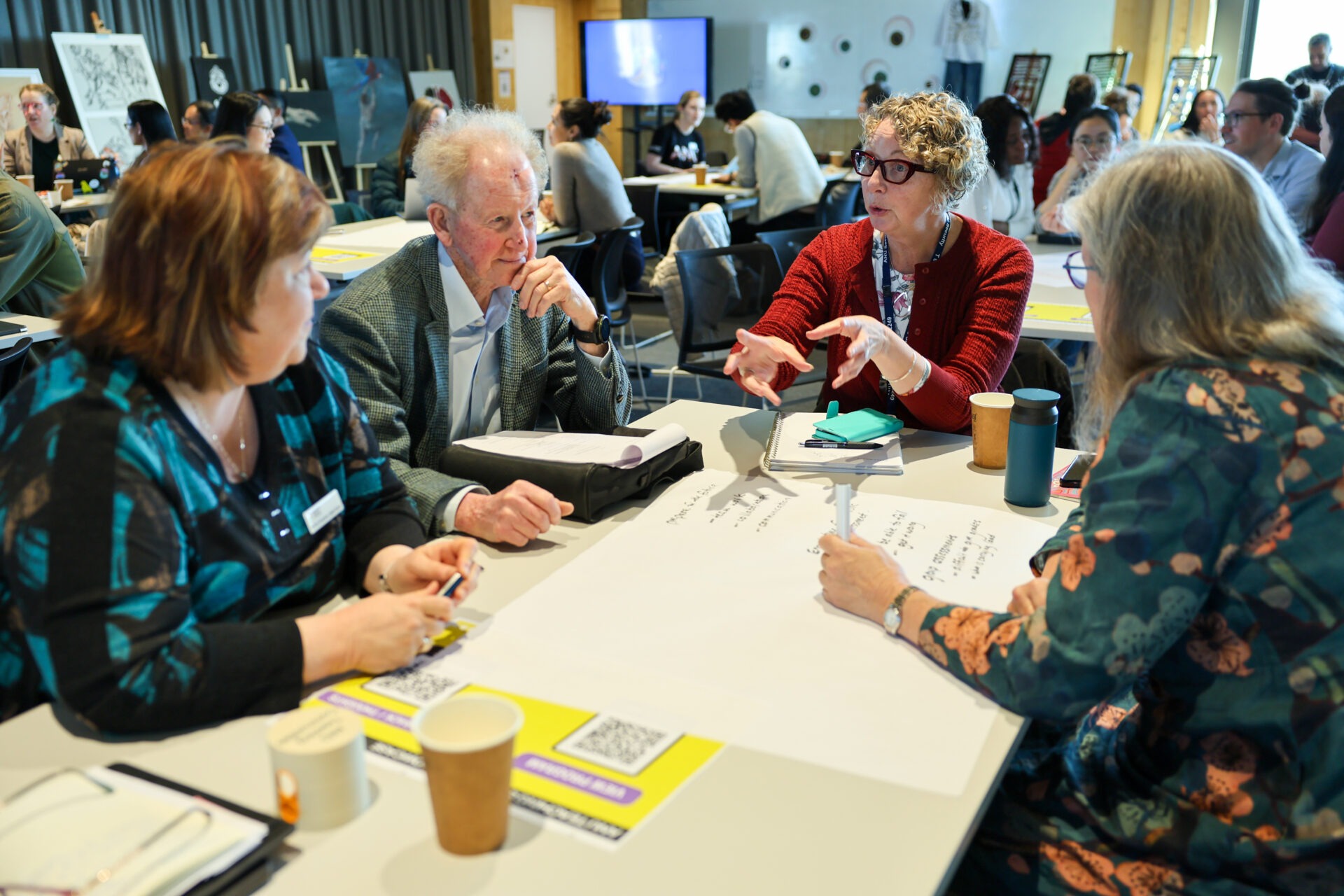
In the first-day AI Working Group session, Merryn shifted attention from policing technology to asking what assessment should achieve. Participants explored assessment of learning, for learning and as learning, considering how tasks can both demonstrate achievement and help students develop.
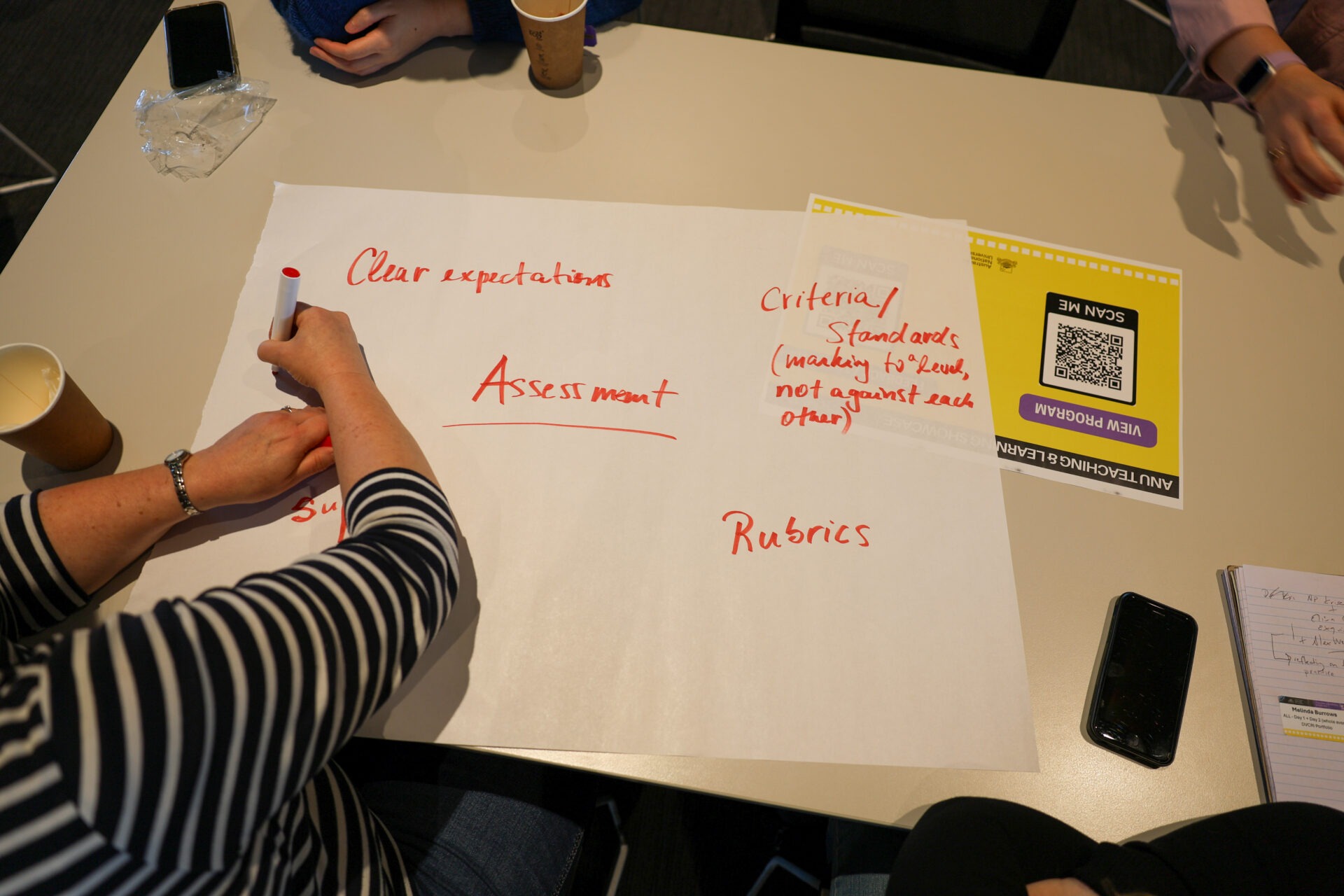
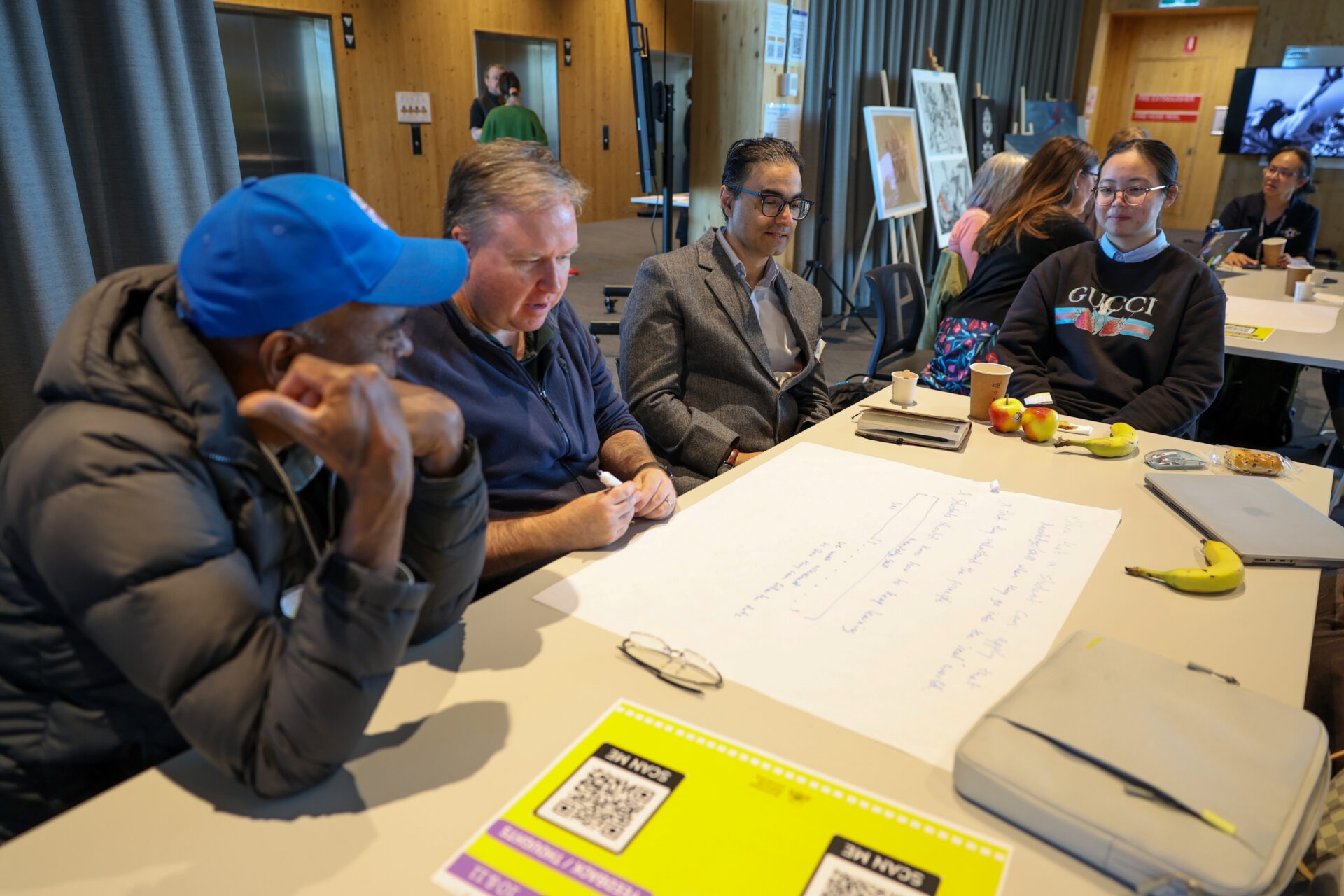
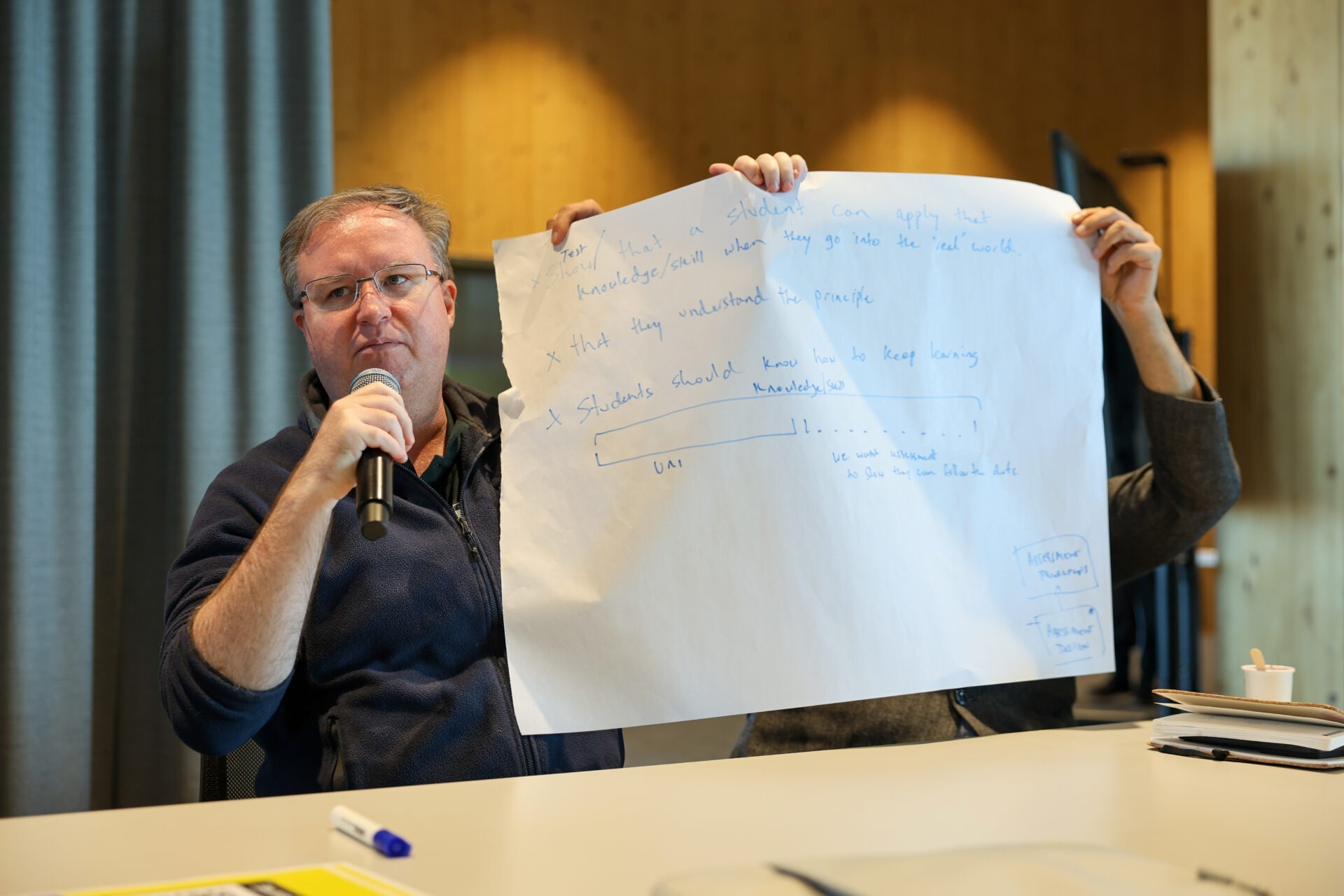
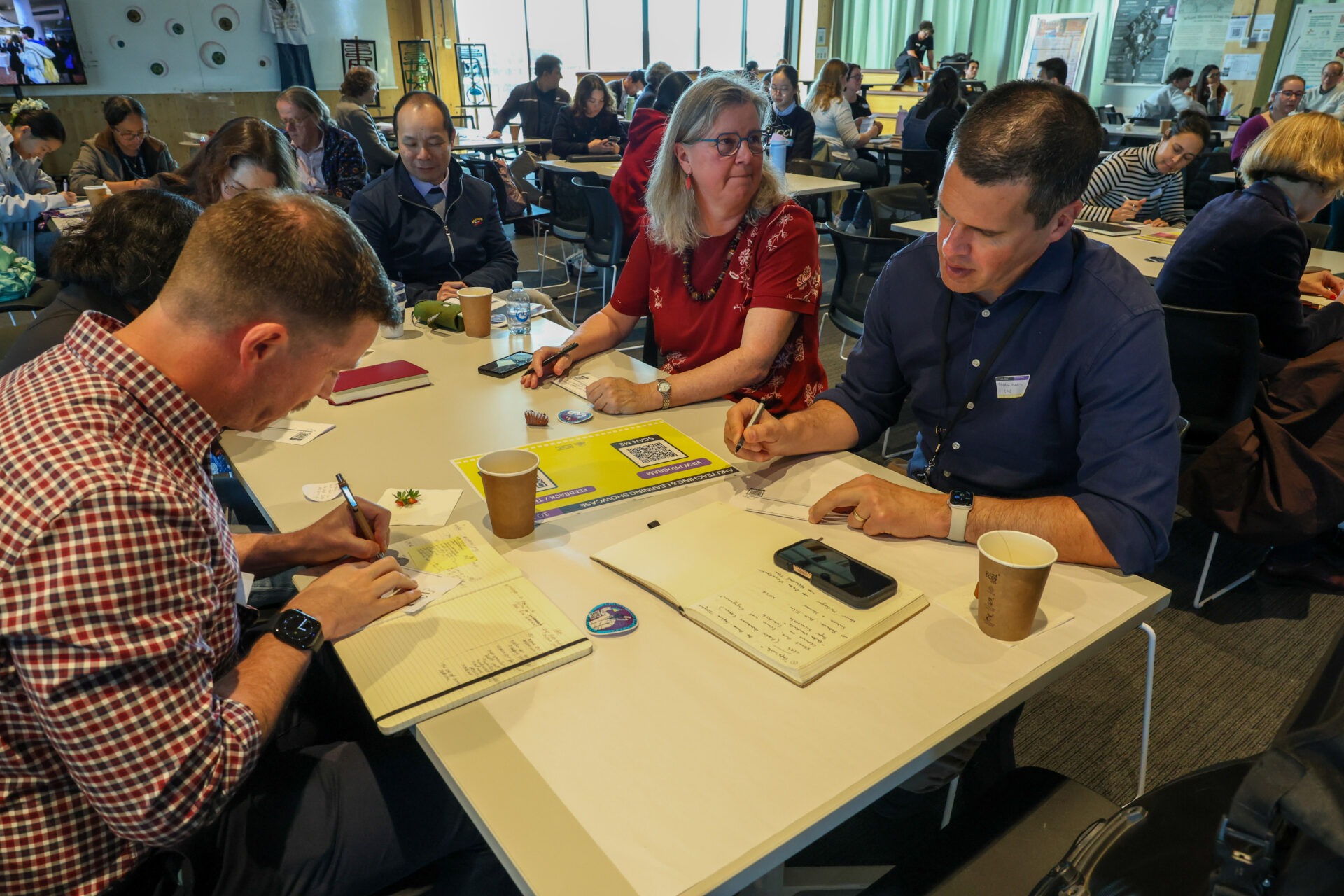
Table discussions raised clear expectations, inclusive design, useful feedback, real-world application, collaboration and room to learn from mistakes. They also surfaced practical tensions: student workload, staff time, assessment clustering and the resources needed for meaningful change. These were contributions to an ongoing conversation about assessment principles.
Download Merryn McKinnon’s AI Working Group slides (PDF)
Watch the panel: assessment and the student experience
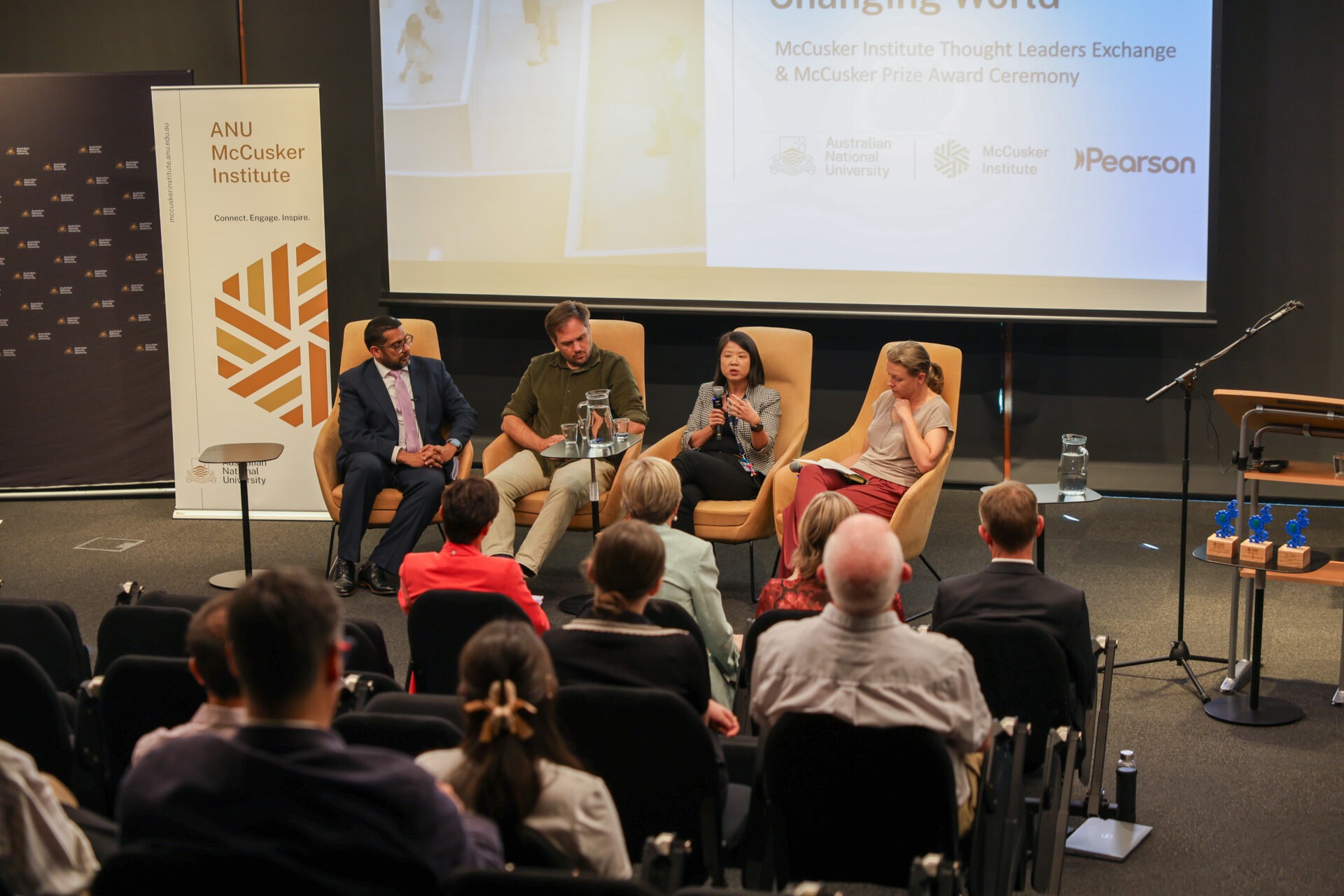
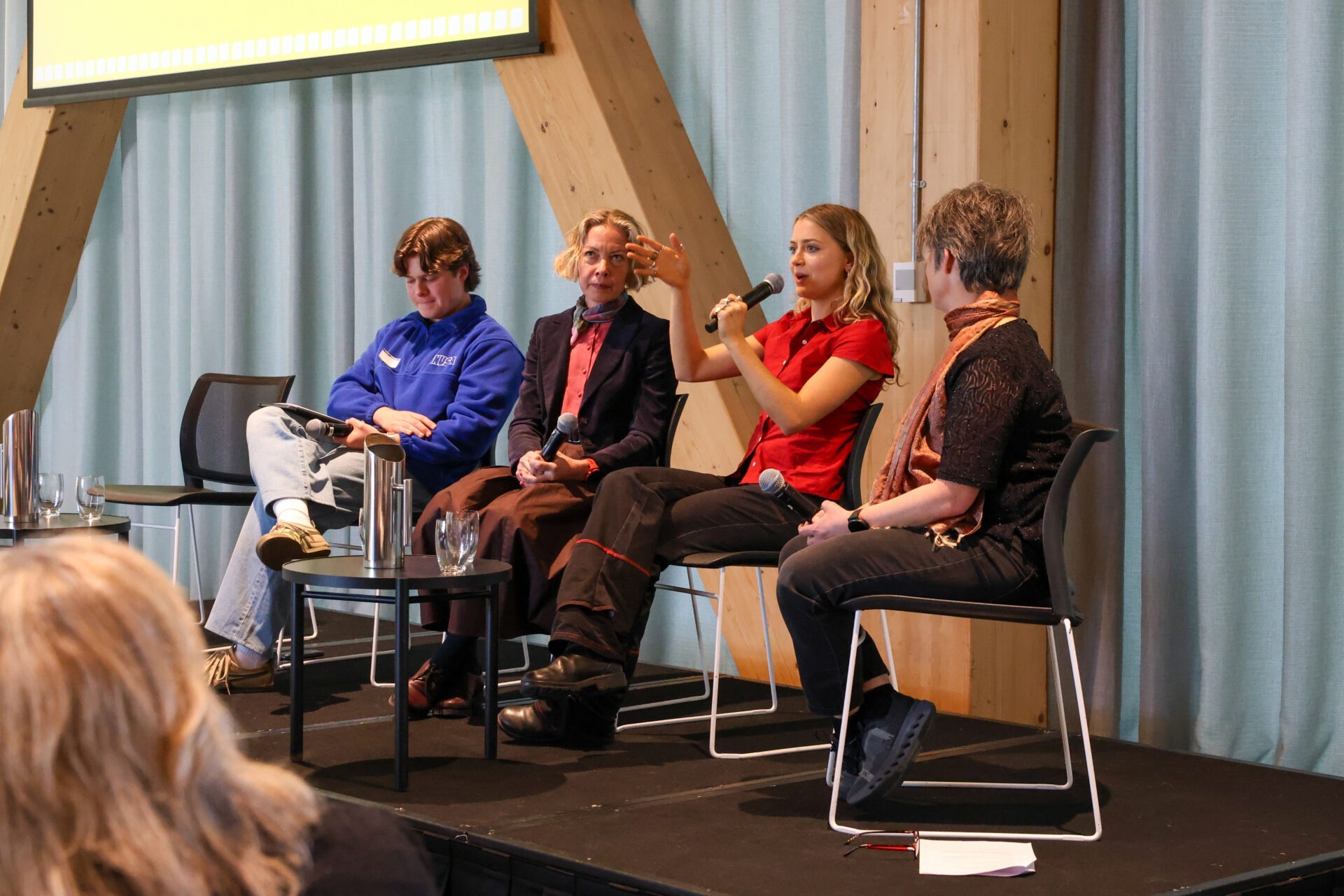
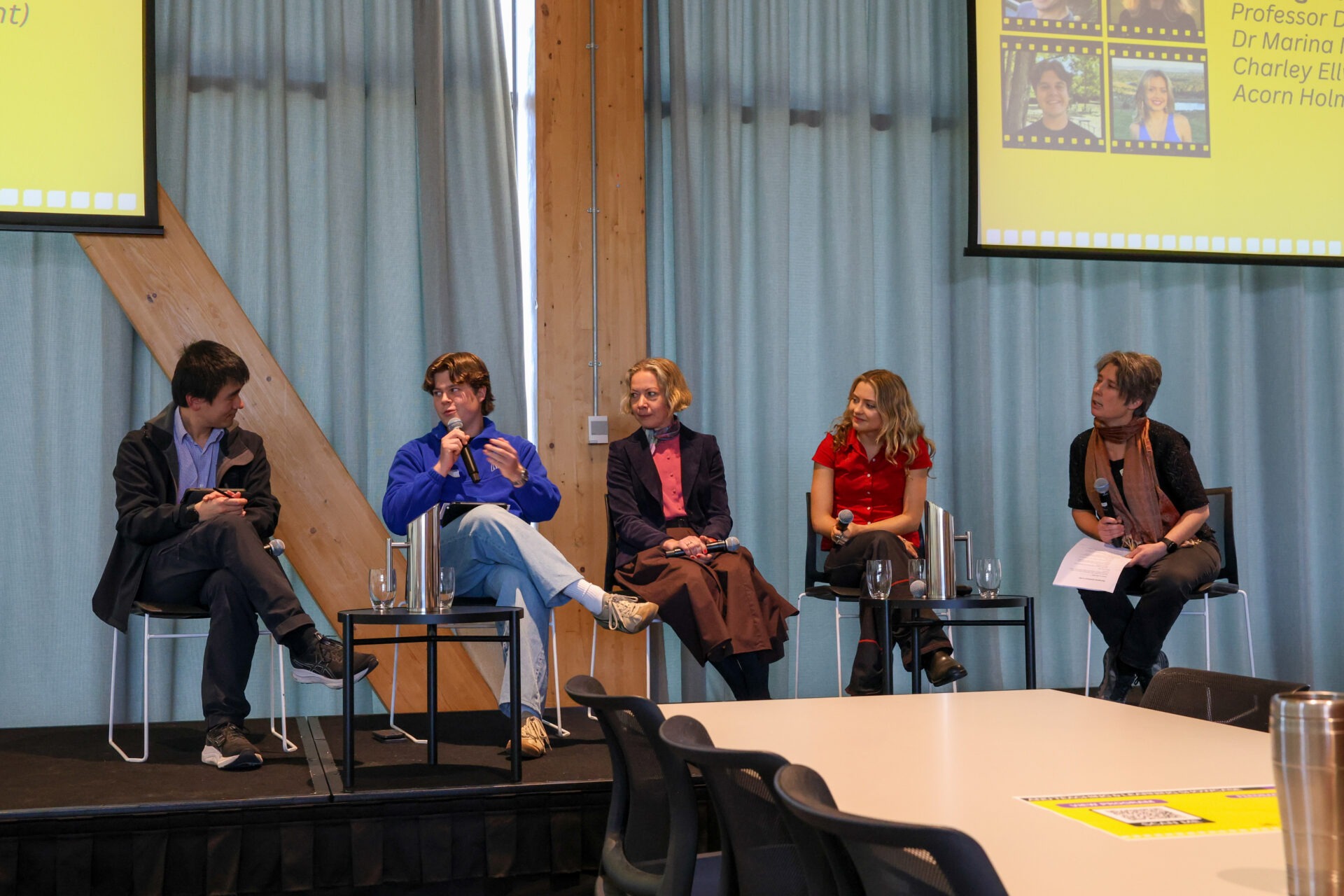
The panel brought Danny Liu, Marina Iskhakova and student perspectives into conversation about motivation, fairness and the value of university. Students described a gap between completing assessed tasks and feeling that their learning was recognised.
35 min 2 sec · Watch on Vimeo
What the discussion brought into focus
- Recognise the learning process. Conversations about how students developed, tested and defended an idea can reveal understanding beyond a finished submission.
- Make the value visible. Links to research, real problems and students’ interests can give them stronger reasons to engage.
- Support connection across campus. Belonging and participation depend on the wider university experience as well as what happens in a classroom.
- Design for feasibility. Oral assessment and sustained projects need preparation, clear expectations and realistic staffing.
Ideas to take into teaching
Different disciplines. Shared questions.
The Showcase’s classroom examples gave these big questions practical form. Expand each theme to explore the approaches shared by presenters.
Learning through action, play and experimentation
Play, participate, partner — Samira Nazar
Samira described entrepreneurship education as an opportunity to build agency, confidence and resilience. Simulations let students test decisions; conversations with potential customers challenged their assumptions; and partnerships connected business knowledge with scientific and technological projects. The emphasis was on what students become through experience.
Download Samira Nazar’s slides (PDF)
Escape rooms as alternative assessment — Bernardo Nunes
Participants experienced collaborative puzzle-solving before considering how to design an educational escape room. Bernardo stressed the importance of aligning puzzles with learning outcomes and building in a debrief: solving a puzzle does not automatically mean students recognise the concepts they used.
Learning through making — John Debs
John presented ANU MakerSpace as a shared community of people, tools and expertise. Examples ranged from physics investigations to 3D-printed musical instrument components. Videos, check-ins and reflection can capture the decisions, experimentation and learning behind a project, alongside what students make.
Download John Debs’ slides (PDF)
Gameful learning — Thomas Biedermann
Thomas explored games as ways to understand and question complex systems. Participants helped choose the direction of his presentation, while examples of game design showed how rules and player choices can make assumptions, competing interests and opportunities for collaboration visible.
Assessment that helps students understand their learning
Supporting transition through mastery — Adam Piggott
Adam shared a first-year mathematics approach developed with a colleague that separates demonstrating foundational mastery from showing deeper conceptual understanding. Students who do not initially meet the mastery threshold have opportunities for support and another attempt. The approach also carries a substantial administrative workload.
Download Adam Piggott’s slides (PDF)
From marks to mastery — William Lim
William demonstrated a developing approach that tags practice questions by the skills they test. Students record whether they solved a question independently, needed help or want to revisit it. A dashboard then connects their practice to particular skills, making revision more targeted. The interactive tool was still being trialled; its effects on outcomes had not yet been established.
Download William Lim’s slides (PDF)
A dialogue-driven learning cycle — Wai-Man (Raymond) Liu
Raymond connected preparation, trading simulations, classroom discussion, reflective reporting and interactive oral assessment. Students explain their decisions and connect experience with theory. Regular practice and mock assessments help prepare them for the oral component, with attention needed to anxiety, language and scheduling.
Crossing disciplines and creating work with an audience
Graduate attributes in practice — Stephen Dann
Stephen shared the challenges of integrating transdisciplinary problem-solving into marketing. Reviewing the course exposed assumptions about group work, disciplinary integration and students’ availability. The value lay partly in examining the curriculum itself, even where the intended design proved difficult to implement.
Download Stephen Dann’s slides (PDF)
Exquisite Corpse — Krisztina Valter and Elisa Crossing
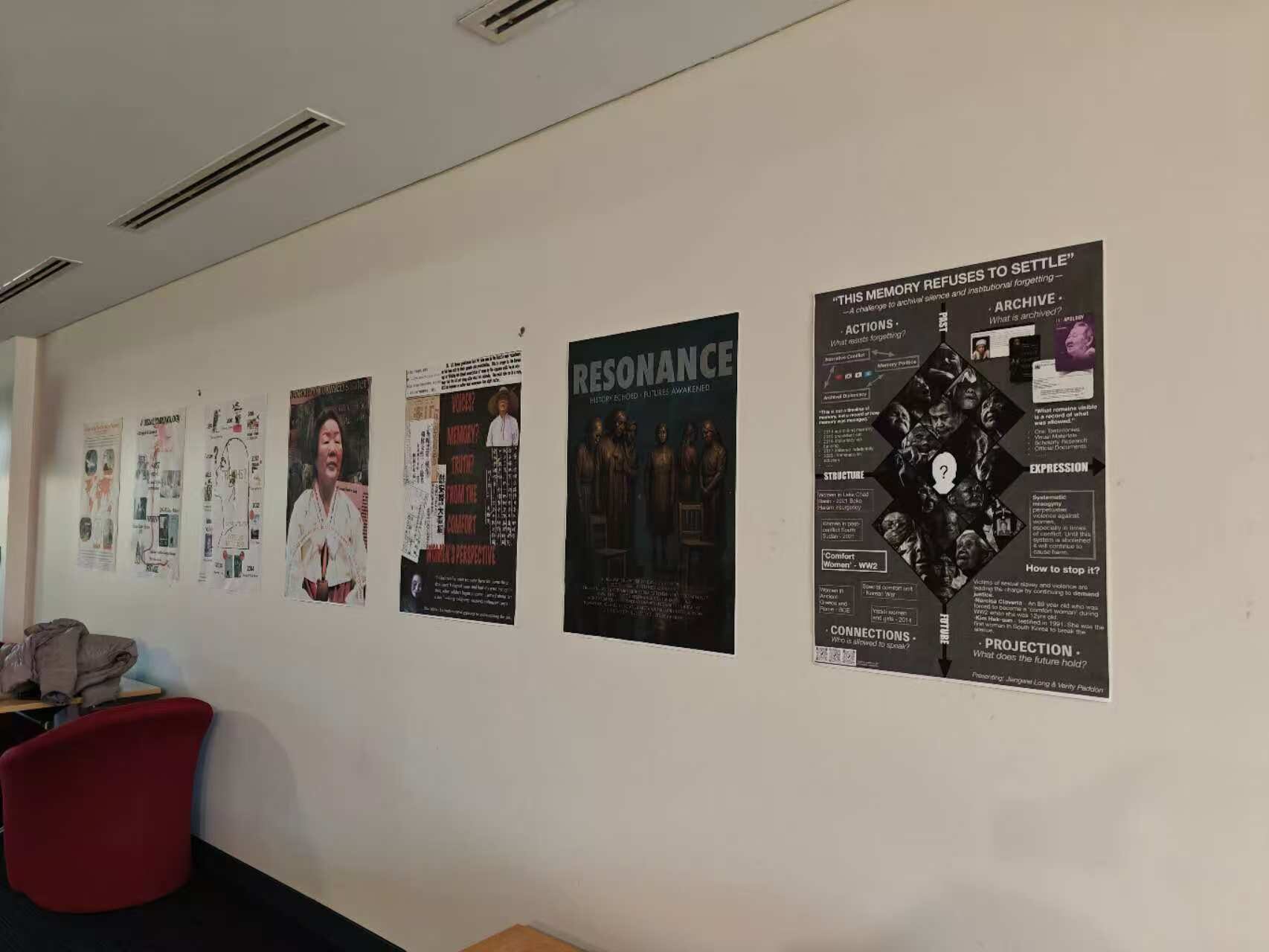
Art and anatomy met through collaborative teaching, studio practice, reflection and a student exhibition. The presenters described how giving both disciplines equal standing created opportunities for embodied learning, empathy, communication and working with uncertainty. Students’ creative processes mattered alongside their finished works.
Download Krisztina Valter and Elisa Crossing’s slides (PDF)
Students as creators — The Popsicule
The Popsicule connected science, popular culture and public engagement, treating students as intellectual partners. Examples included student research, publications and public conversations, alongside creative approaches to science communication. The workshop invited participants to experiment with creative engagement themselves.
Inform, visit, reflect, create — Yujie Zhu
Yujie described a learning journey through heritage, museums, Country and public interpretation. Students test information against encounters with places and people, reflect on what changes their understanding, and create work for an audience. AI memos make visible what students used, verified, challenged or rejected.
Download Yujie Zhu’s slides (PDF)
Collaboration for social impact — the McCusker Institute
Chris Browne and contributors from across the Institute’s community shared experiences of partnerships, collaboration across difference and learning through feedback. Staff and student accounts highlighted how disciplinary skills can contribute to real-world projects and social change.
Relationships, belonging and purposeful engagement
Build relationships for learning — Ann Smith
Ann placed trust at the centre of her teaching design. Preparation videos, interactive seminars, ungraded group activities, peer feedback and oral conversations create opportunities for sustained communication. Reflection also helps students recognise their own development and connect learning with future practice.
Download Ann Smith’s slides (PDF)
Make the “why” clear — Safiya Okai-Ugbaje
Safiya distinguished participation from enjoyment. Clear goals, appropriately challenging tasks and immediate feedback can help students see value in their work. Examples included different levels of technical challenge and opportunities to exercise choice, allowing students with varied backgrounds to find a meaningful way into learning.
Download Safiya Okai-Ugbaje’s slides (PDF)
Beyond the certificate — Marina Iskhakova
Marina framed the Education Fellowship Scheme as an opportunity to understand and develop one’s teaching. Her five Rs — reflection, rigor, recognition, reciprocity and reinvention — connected evidence-informed practice with professional identity, mentoring and contribution to the teaching community.
Pedagogy in practice — a community conversation
Retrieval practice and learning from mistakes — Petra Vaiglova
Petra drew on cognitive science to combine retrieval practice, spacing and interleaving. Brain dumps and small, erasable whiteboards help students recall ideas, reveal gaps and try again without being graded. A scaffolded activity asks groups to hide scientific truths in fictional narratives, prompting peers to identify and explain them.
Making the hidden curriculum visible — Tatiana Burr
Tatiana examined how curriculum choices, maps and classroom expectations communicate assumptions about whose knowledge matters. Glassblowing and material-making experiences broaden students’ approaches to ancient history. Creative assessment sits alongside essay options, with research questions, sources, clear rubrics and a written explanation of the creative process.
Creativity within professional education — Wayne Morgan
Wayne showed how poetry and rewritten judgments can help law students critique doctrine, examine emotional responses and communicate with different audiences. Creative tasks are negotiated with students and supported by research and commentary. He also highlighted the additional marking and teaching resources needed to sustain this approach in large cohorts.
Field and place-based learning — Rachel Rodney-Harris
Rachel connected field visits with inquiry, data collection, industry expertise and reflection. Examples included water-quality investigations, vineyard visits and soil fieldwork. Preparation, accessibility and follow-up activities help students turn unfamiliar experiences into learning, while changing conditions require careful coordination and adaptation.
Continuing the conversation
What would help us take the next step?
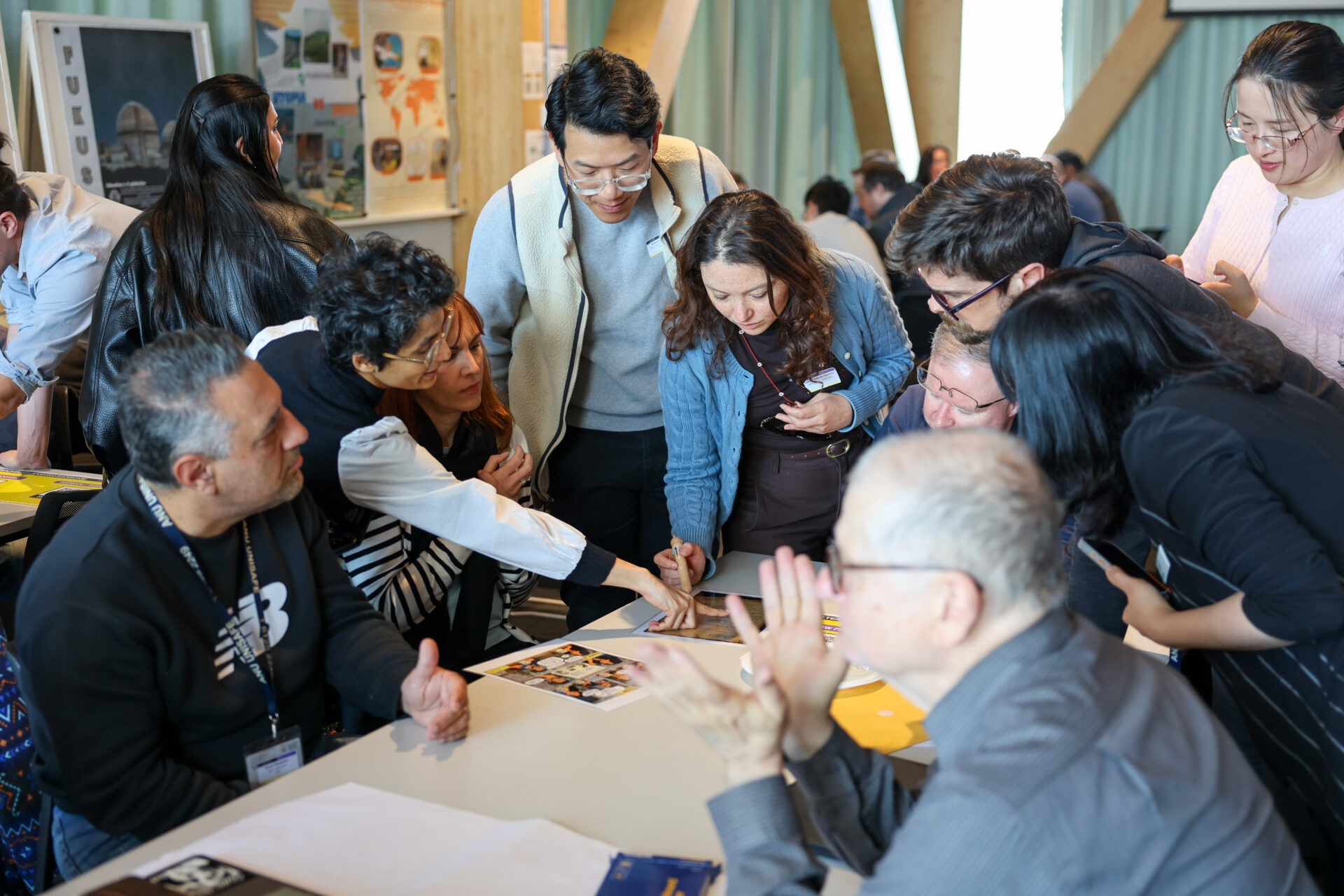
The closing discussion with Mathew Davies, Merryn McKinnon and Suzy Andrew turned from individual teaching ideas to the conditions that help them grow. Participants raised support for program-level design, professional development, recognition of educational work and opportunities to share practice across the University.
The conversation also made room for uncertainty: how to balance ambition with staff capacity, make space to try and revise ideas, strengthen the transition from school to university, and respond to environmental change. These questions remain part of the work ahead.
Questions to take back to your team
- Where could students explain their thinking as well as submit an answer?
- What opportunities do they have to practise, receive feedback and try again?
- How could another discipline, a community partner or a different learning space enrich the experience?
- What time, expertise or institutional support would make a worthwhile change possible?
The program also extended beyond the presentation room, with a guided campus walk announced at the close and a reception at University House. The invitation throughout was to keep sharing experiences, making connections and contributing to the future of learning and teaching at ANU.
People, ideas and participation
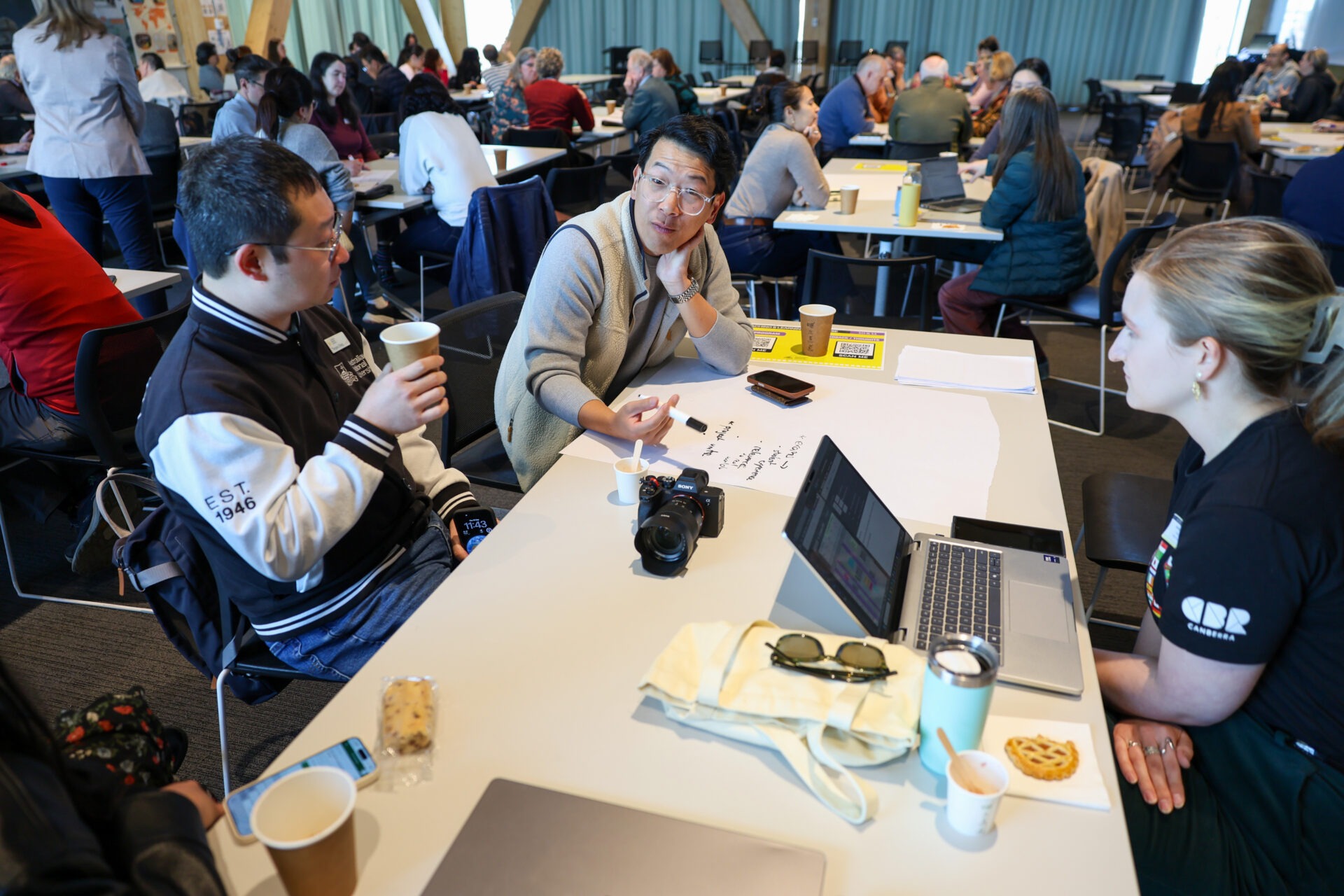
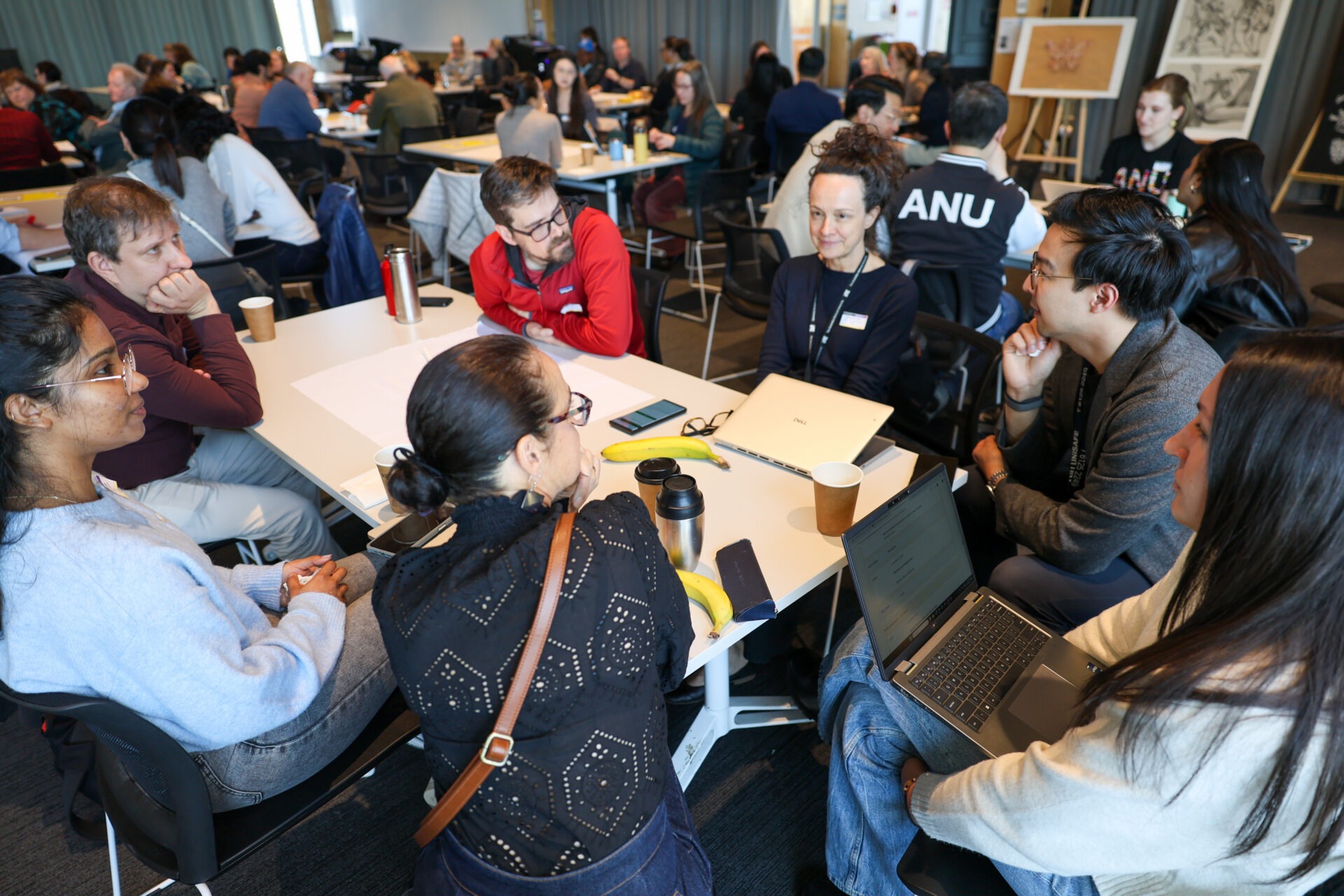
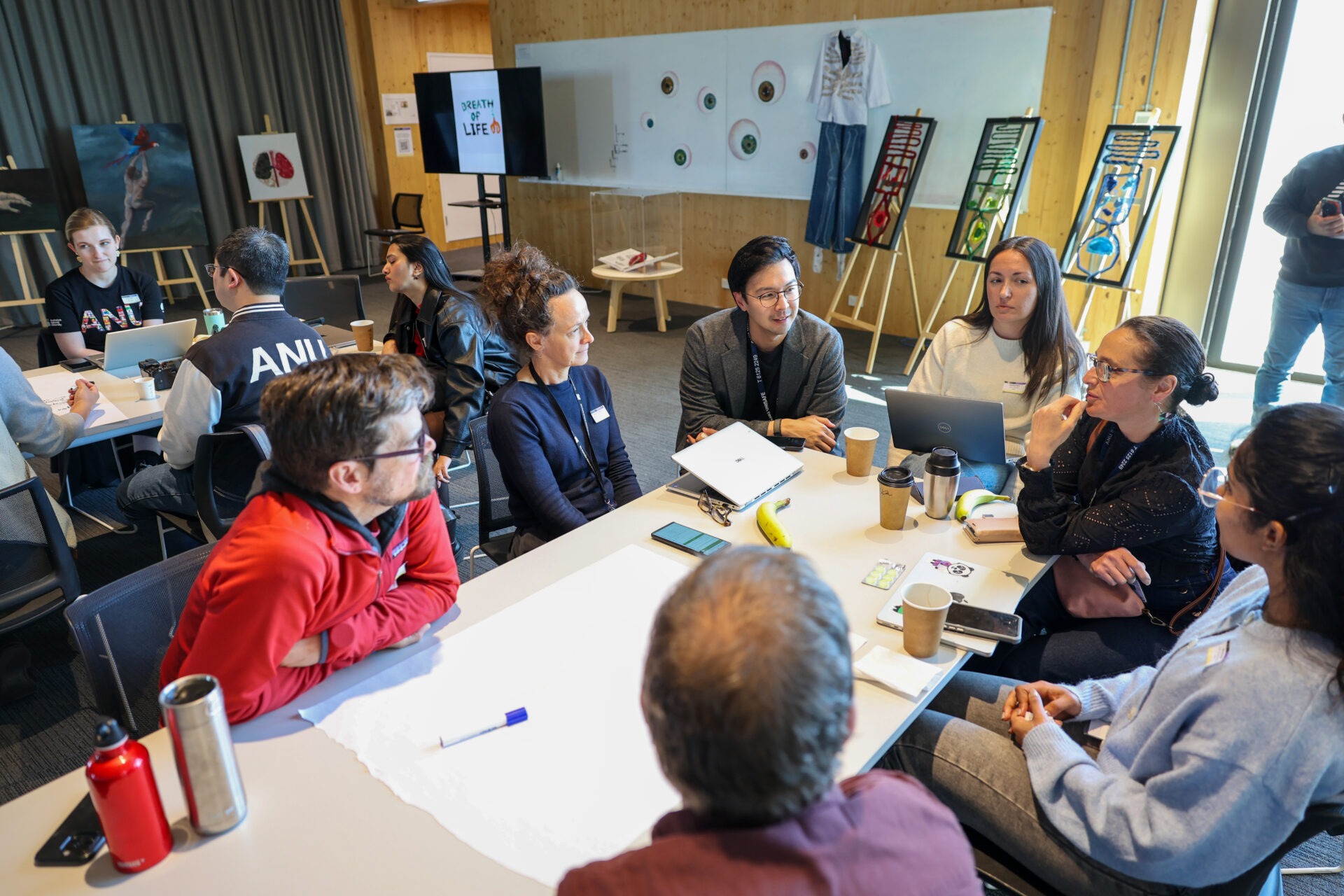
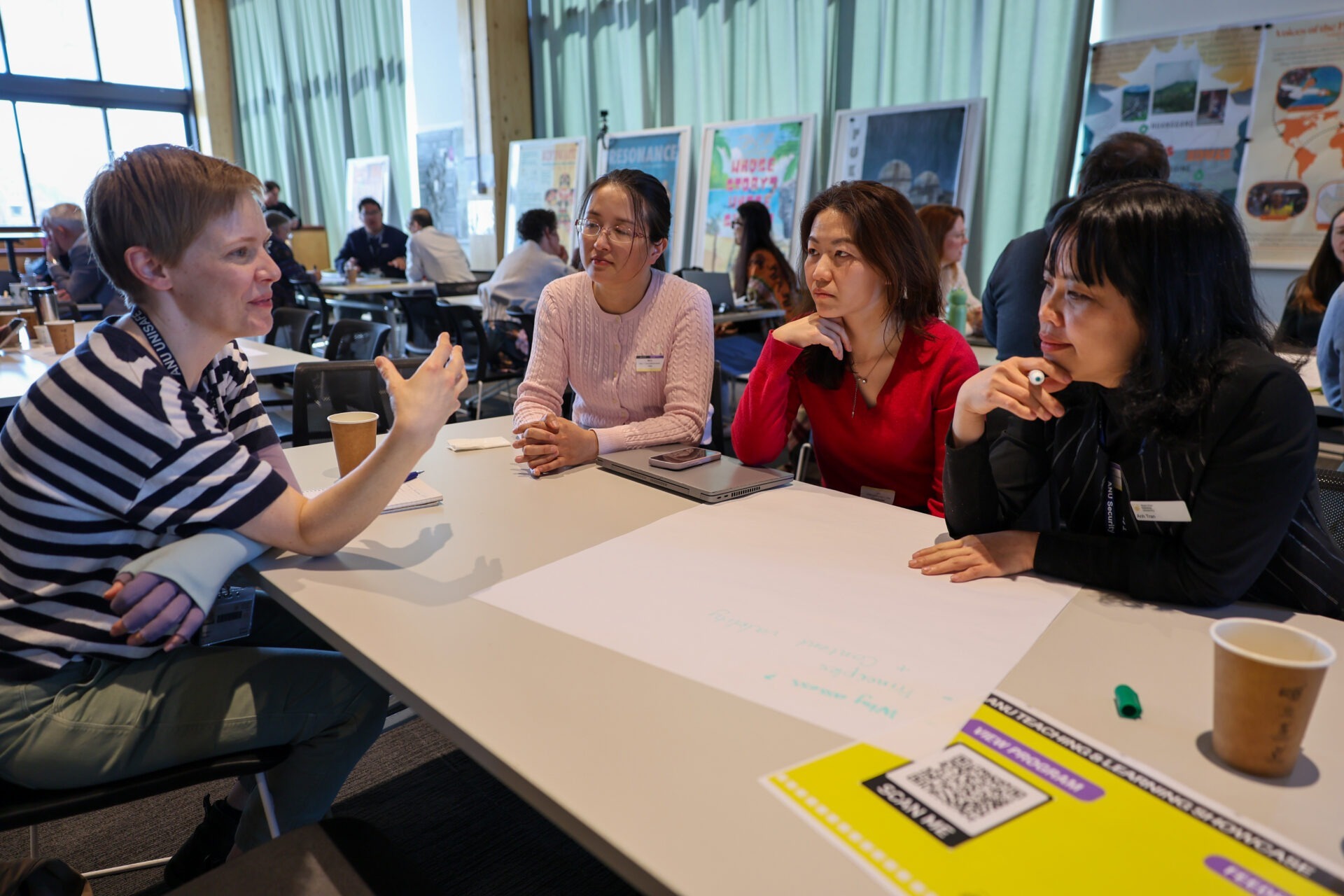
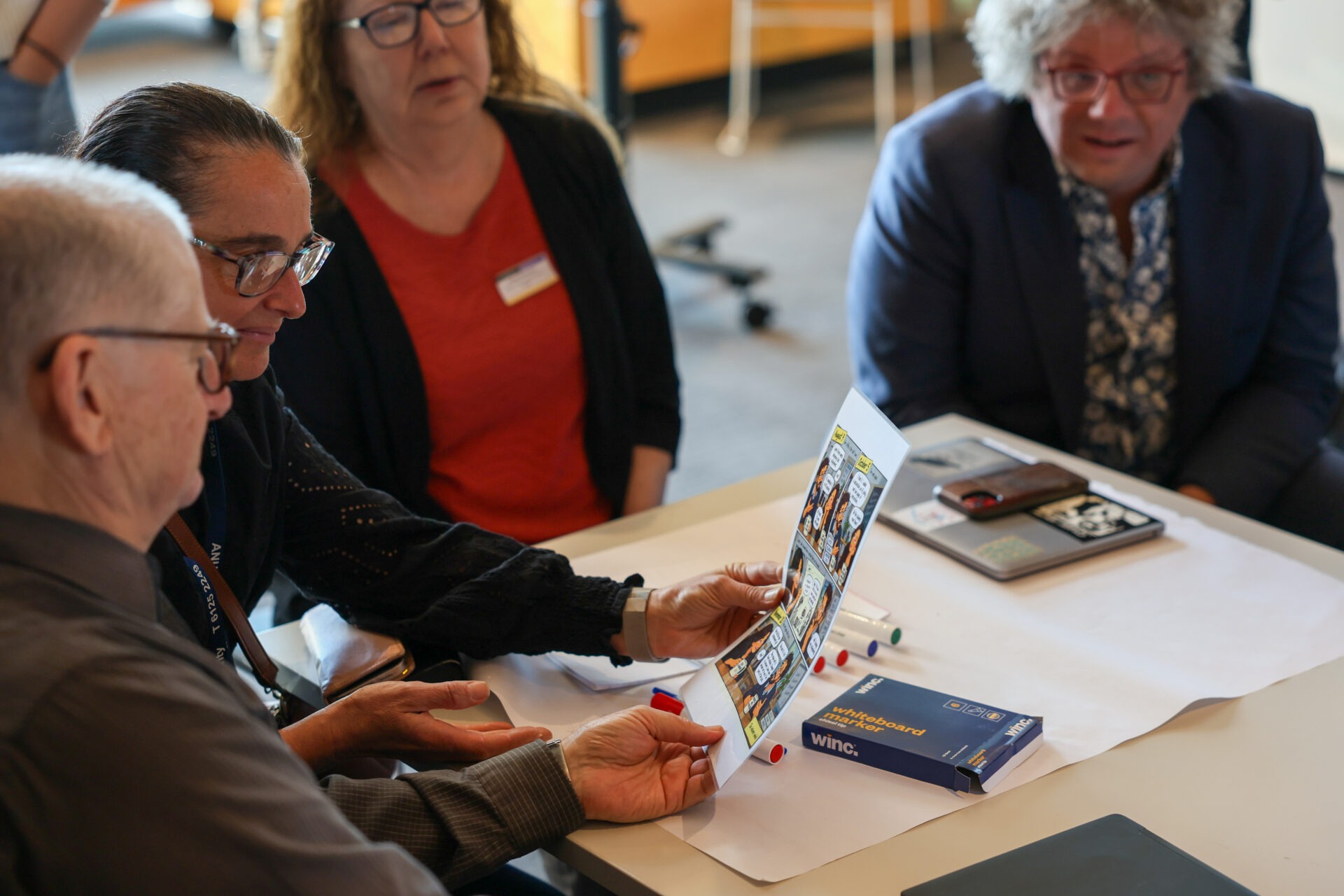
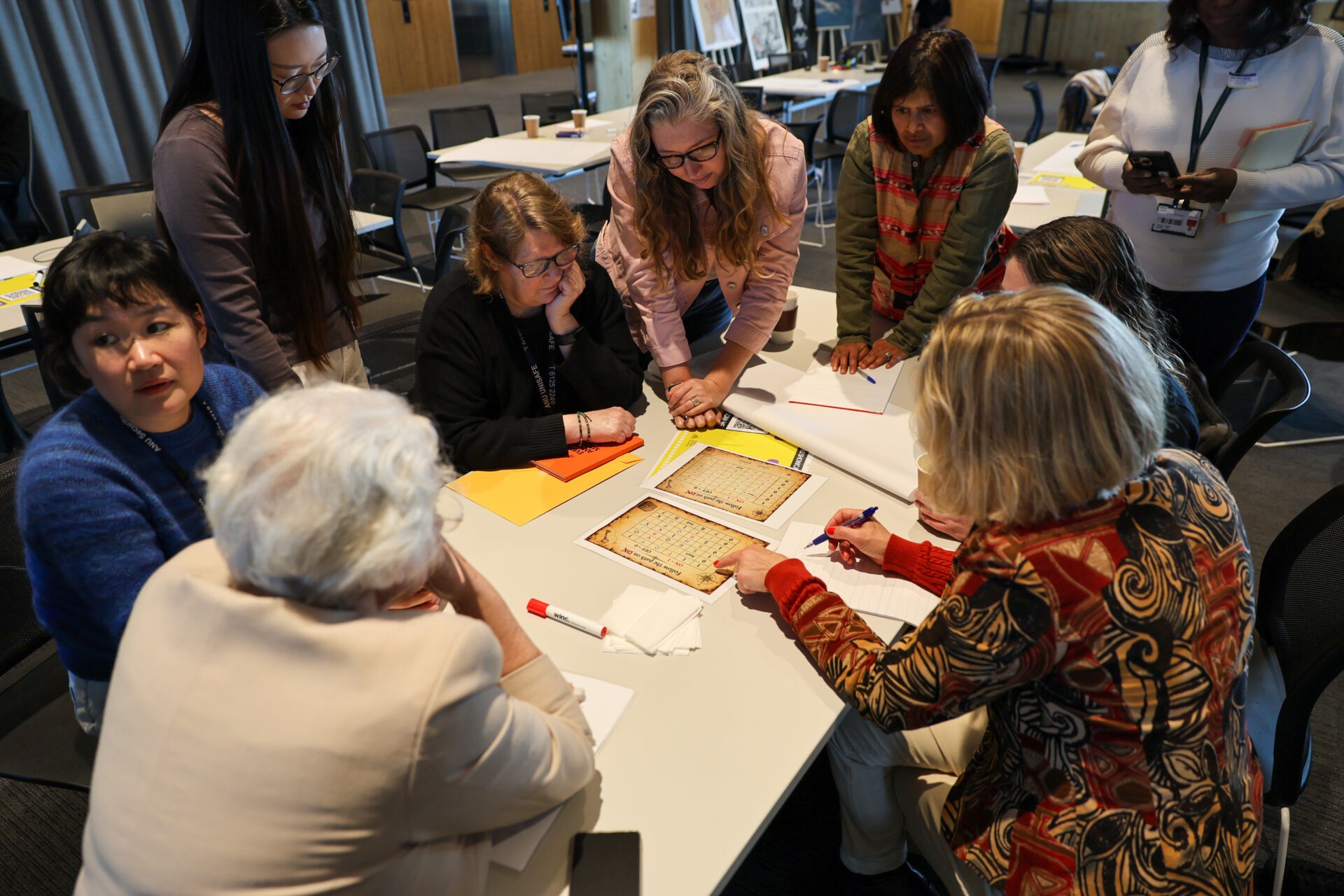
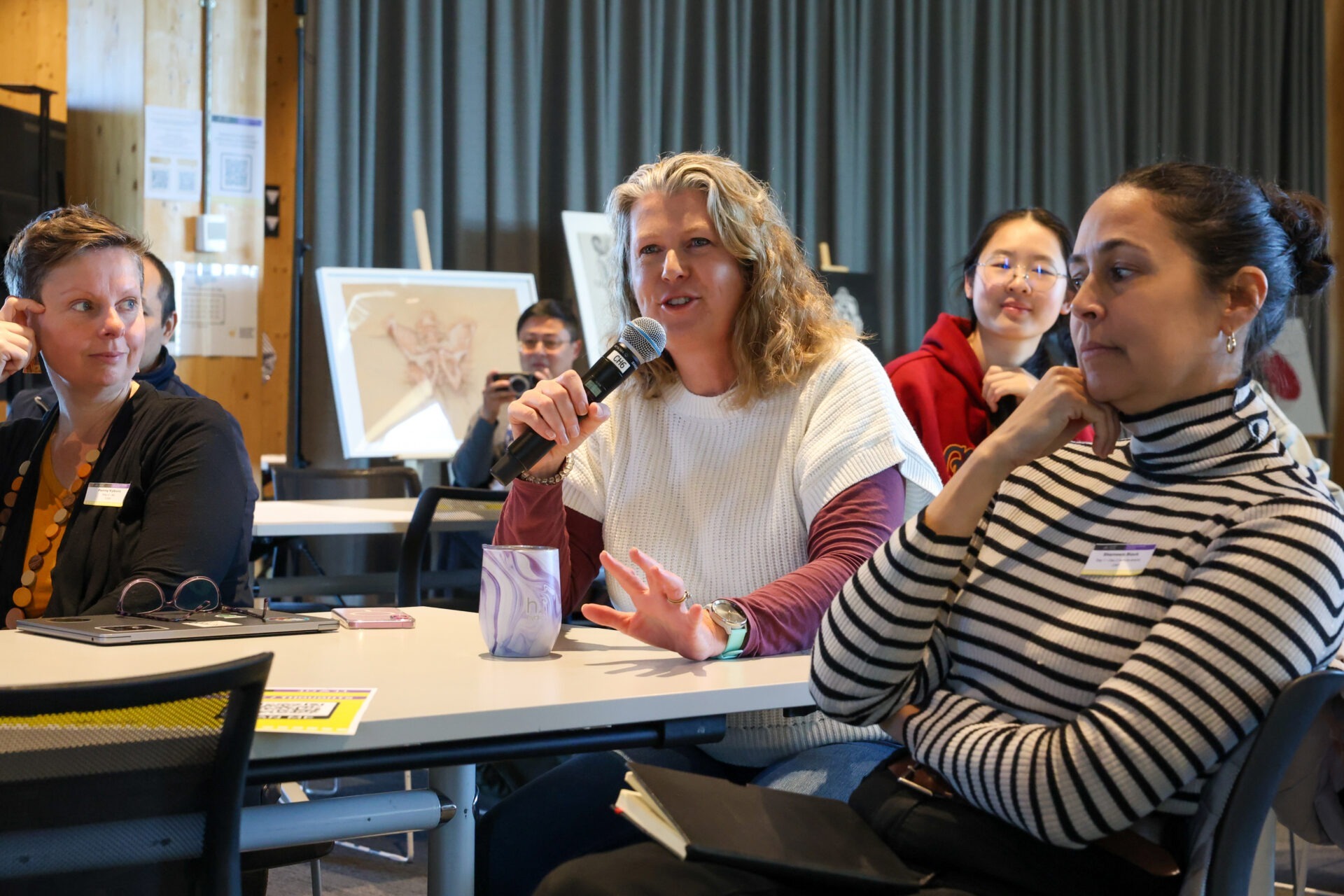
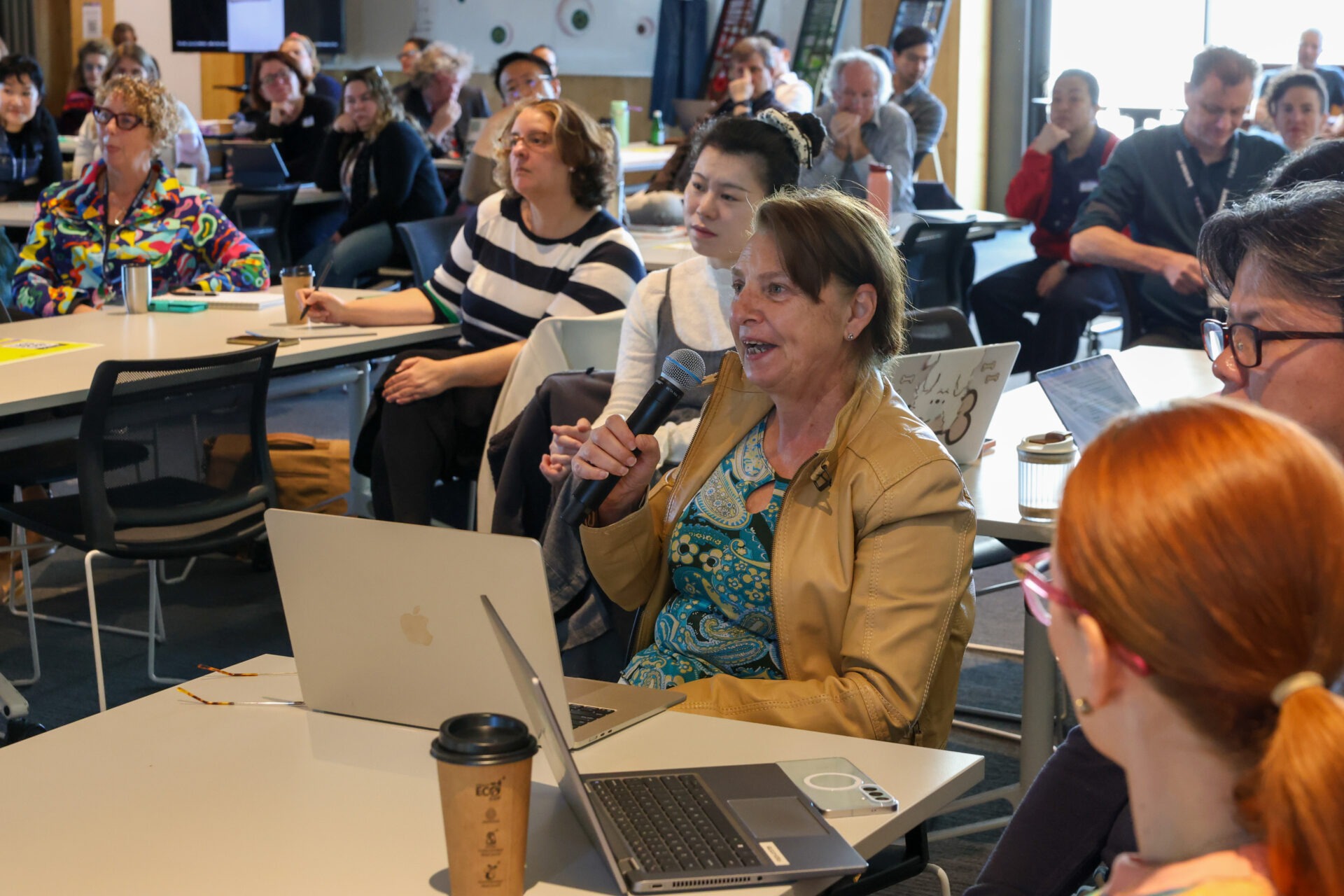
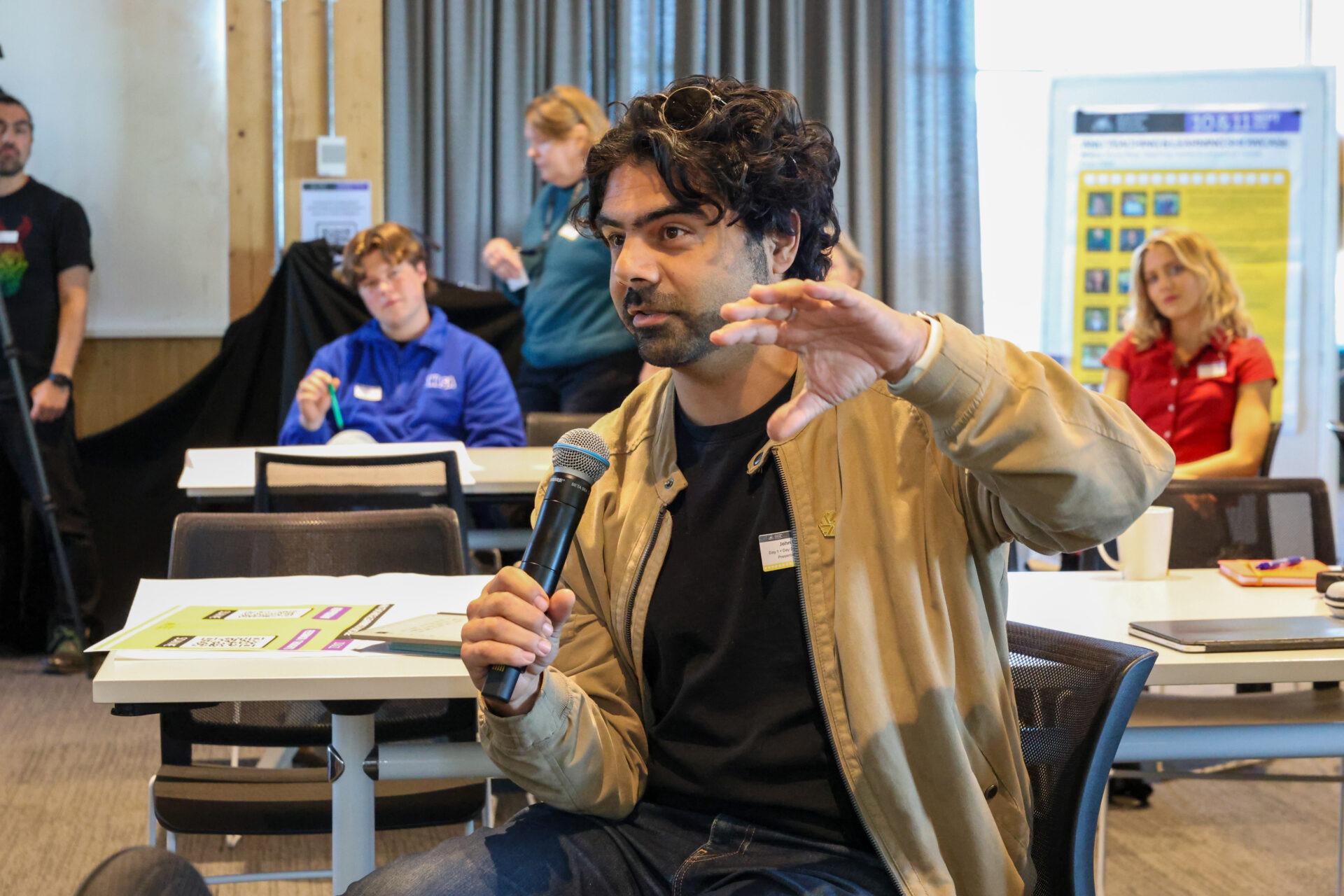
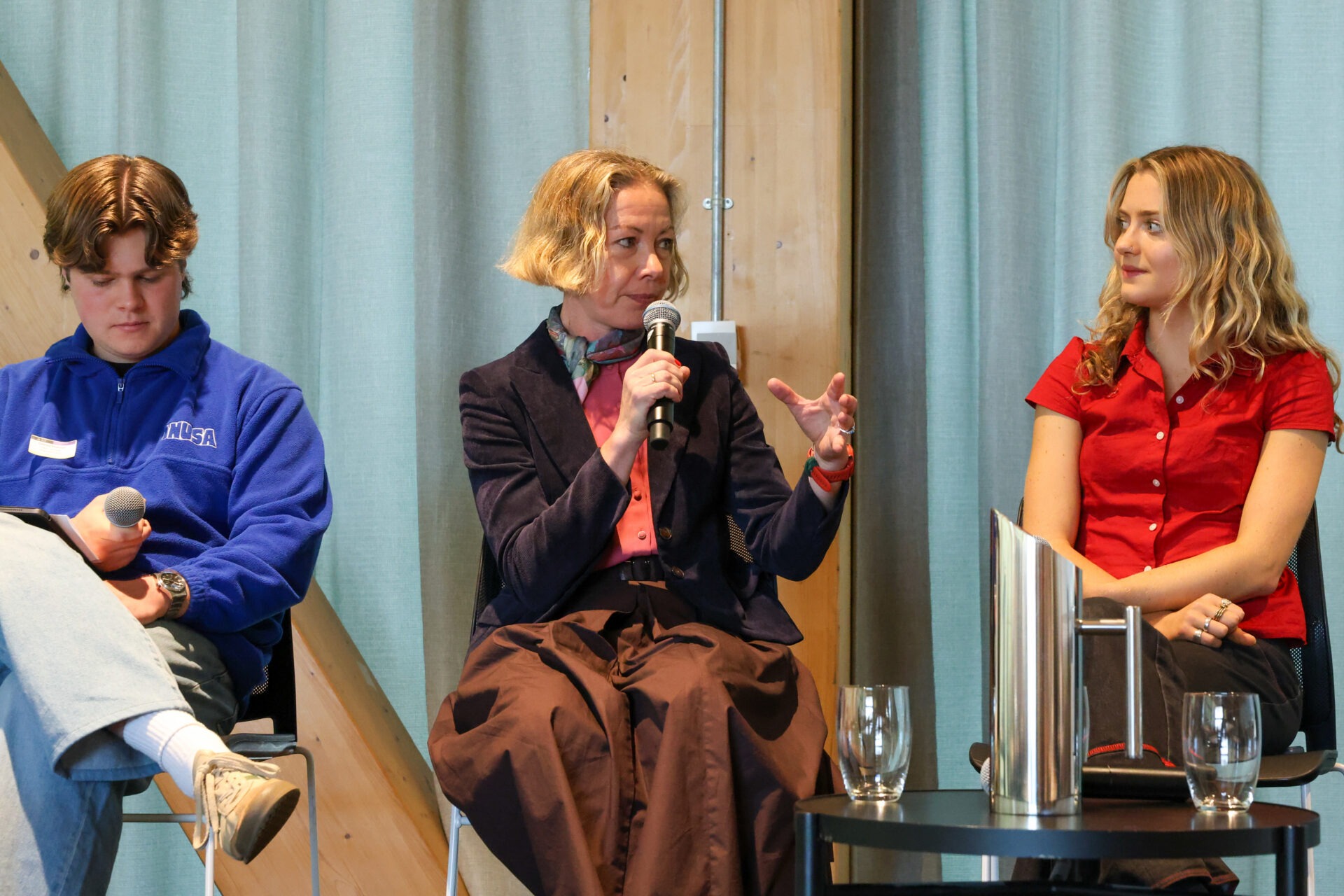
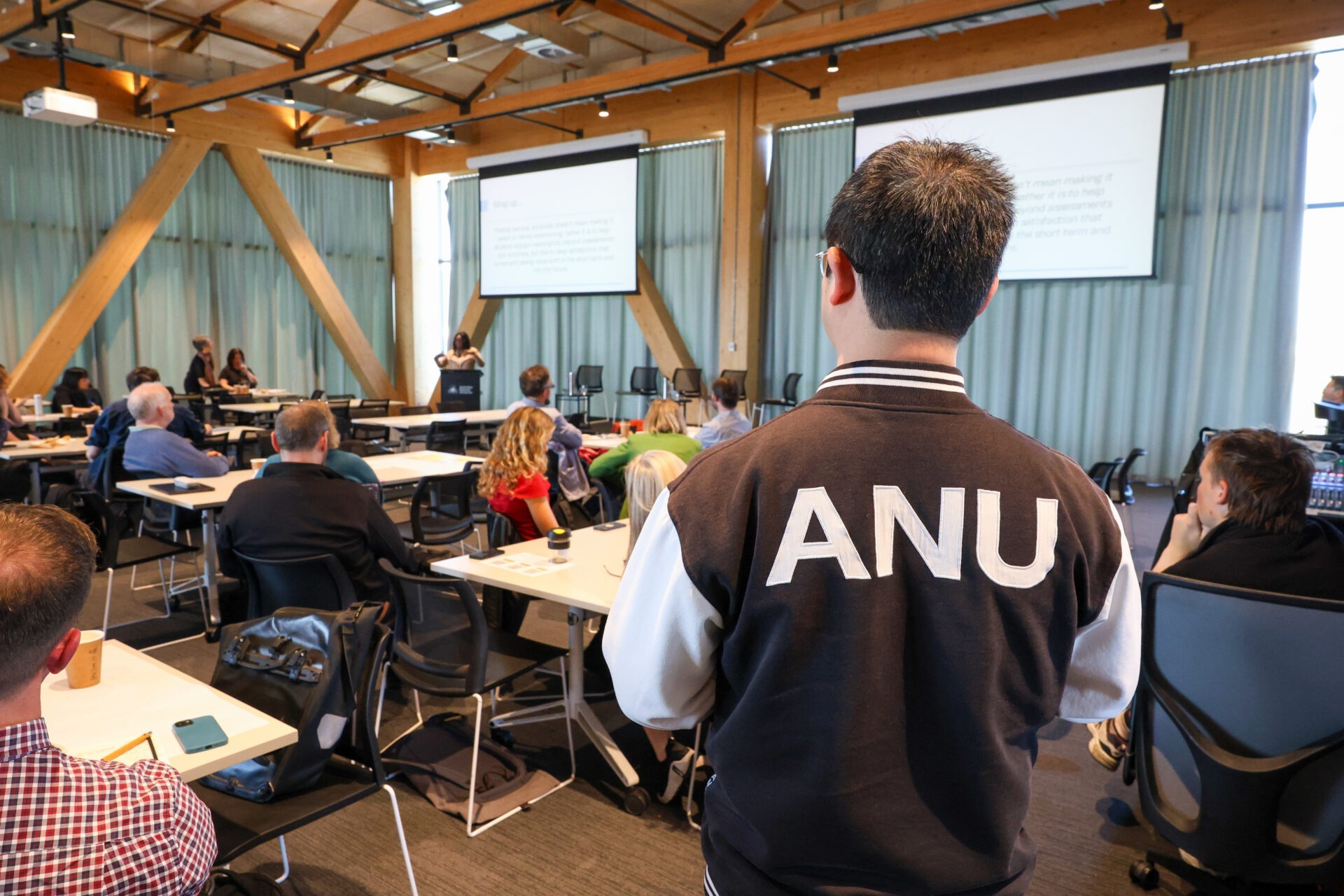
Moments from the Showcase



Thank you for being part of the conversation
Thank you to the presenters, students, participants, organising committee and Teaching Communities and Recognition team who contributed their ideas, experiences and energy.
The Showcase made visible the breadth of educational practice across ANU — and the value of coming together to question, experiment and learn.