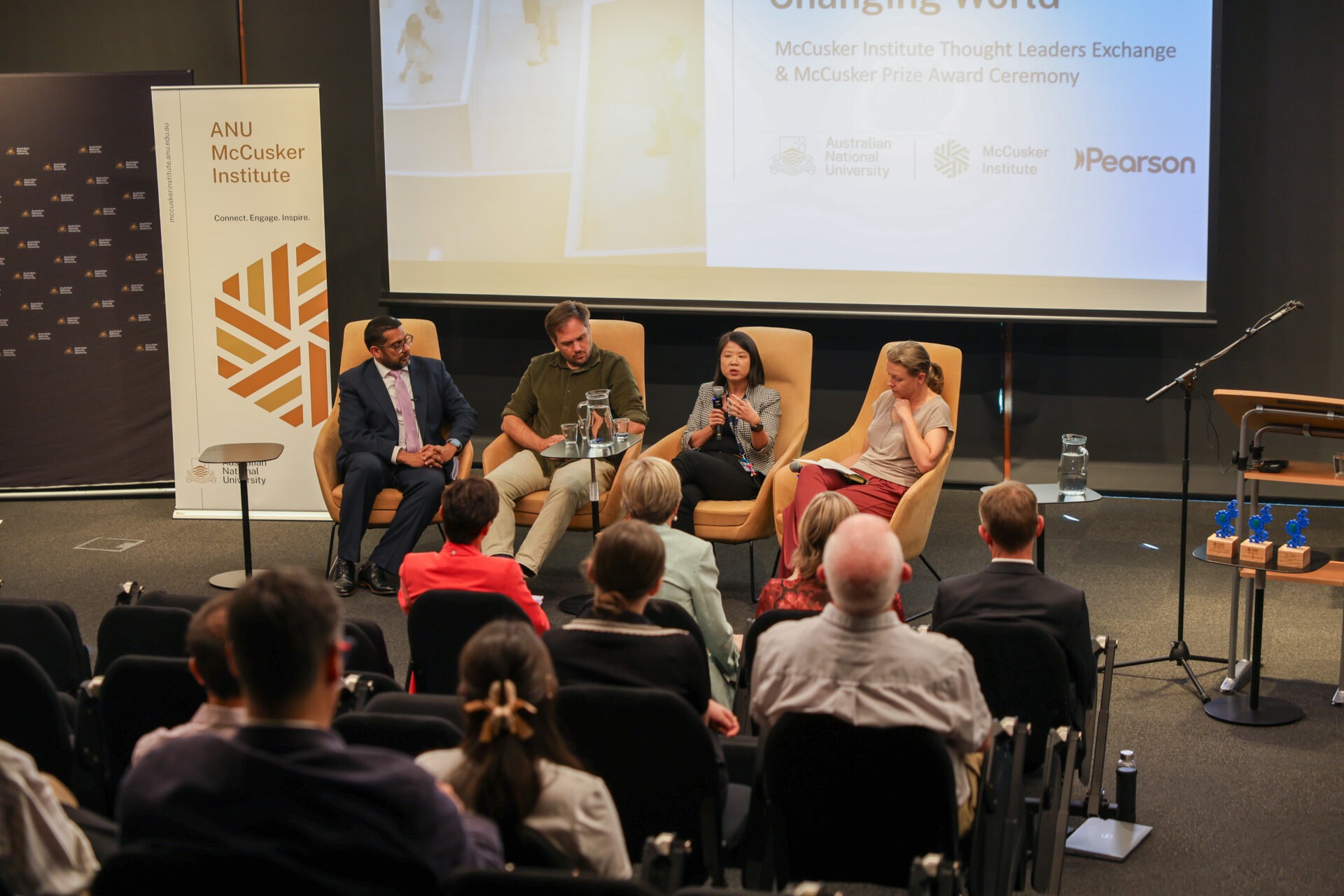
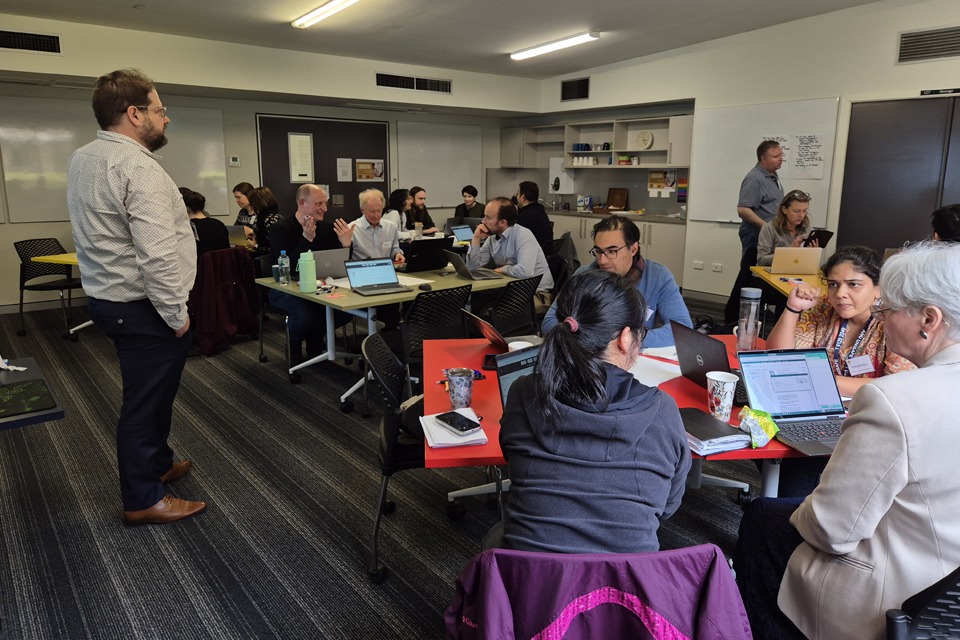
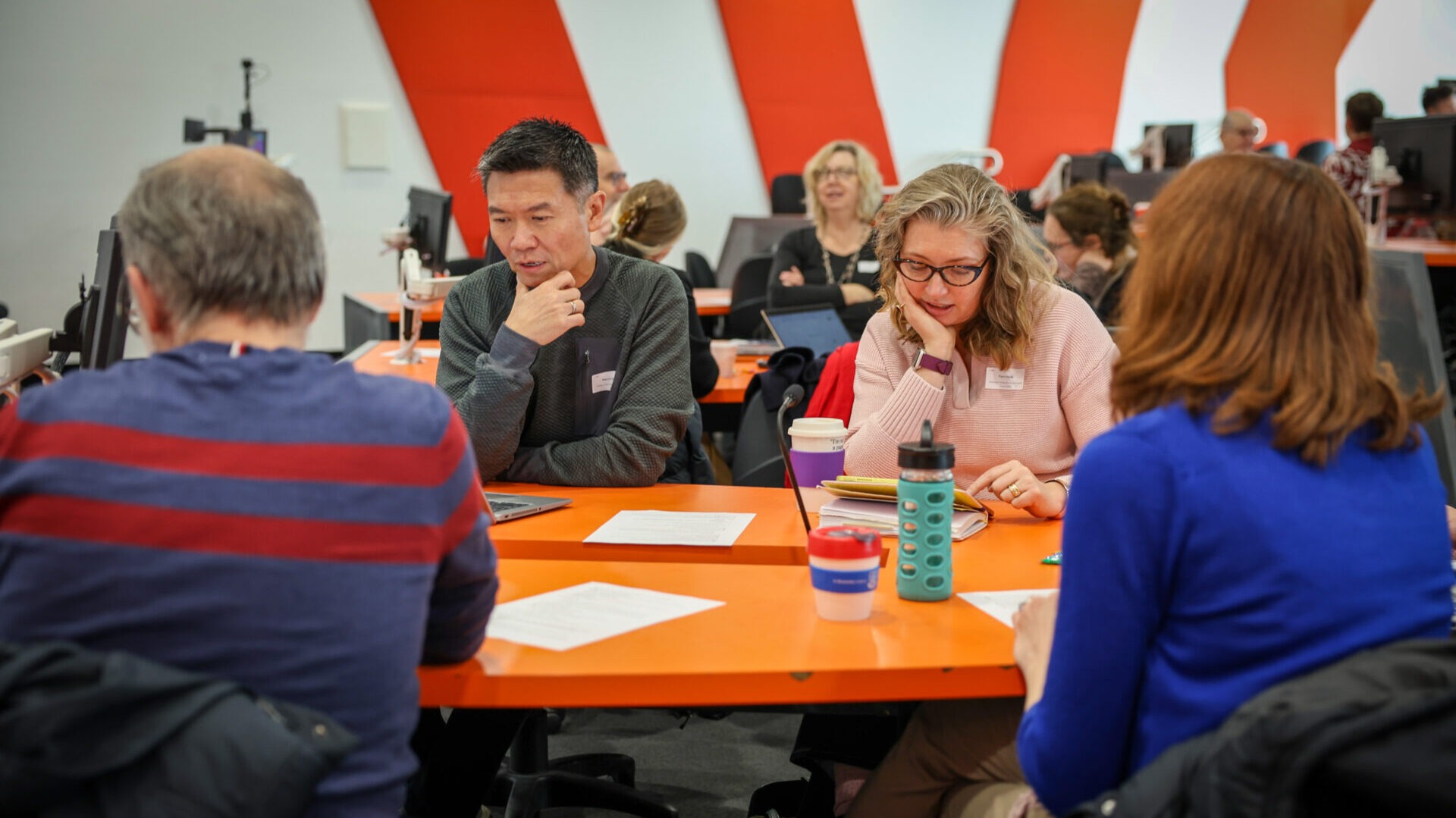
The integration of artificial intelligence (AI) into higher education is no longer a distant possibility—it is a present and pressing reality. At a recent academic workshop hosted by the ANU, keynote speaker Bert Verhoeven outlined why universities must urgently rethink their curriculum, pedagogy, and assessment strategies in light of generative AI (GenAI).
Verhoeven, Senior Lecturer in Innovation and Entrepreneurship at the University of Newcastle, argued that meaningful and ethical use of AI must become a core component of the student learning journey. His team has already implemented mandatory AI use across their Innovation & Entrepreneurship (I&E) major since early 2023, providing a practical model of what AI-first education can look like in Australian universities.
View the full session below:
The Case for Urgent Integration
Students are already using tools like ChatGPT to support their studies, often in unstructured and uncritical ways. According to Verhoeven, if universities do not engage with this technology directly, they risk leaving students underprepared for the realities of modern workplaces shaped by AI.
By 2026, it is anticipated that regulatory expectations will require universities to assure learning outcomes and workplace readiness in the context of widespread AI use. Institutions must begin redesigning learning to incorporate AI not as an afterthought, but as an intentional, structured component of both curriculum and assessment.
Key Capabilities and Limitations of GenAI
GenAI is fundamentally different from previous educational technologies. It:
- Generates content rather than simply retrieving it
- Uses natural language to interact with users in human-like ways
- Enables creative ideation, summarisation, translation, coding, and more
However, it also presents challenges:
- AI can “hallucinate” or fabricate information
- It lacks lived experience, common sense, and ethical judgment
- Outputs may reflect embedded biases in training data
This dual nature underscores the need to embed GenAI literacy across all disciplines, focusing on both its use and its limitations.
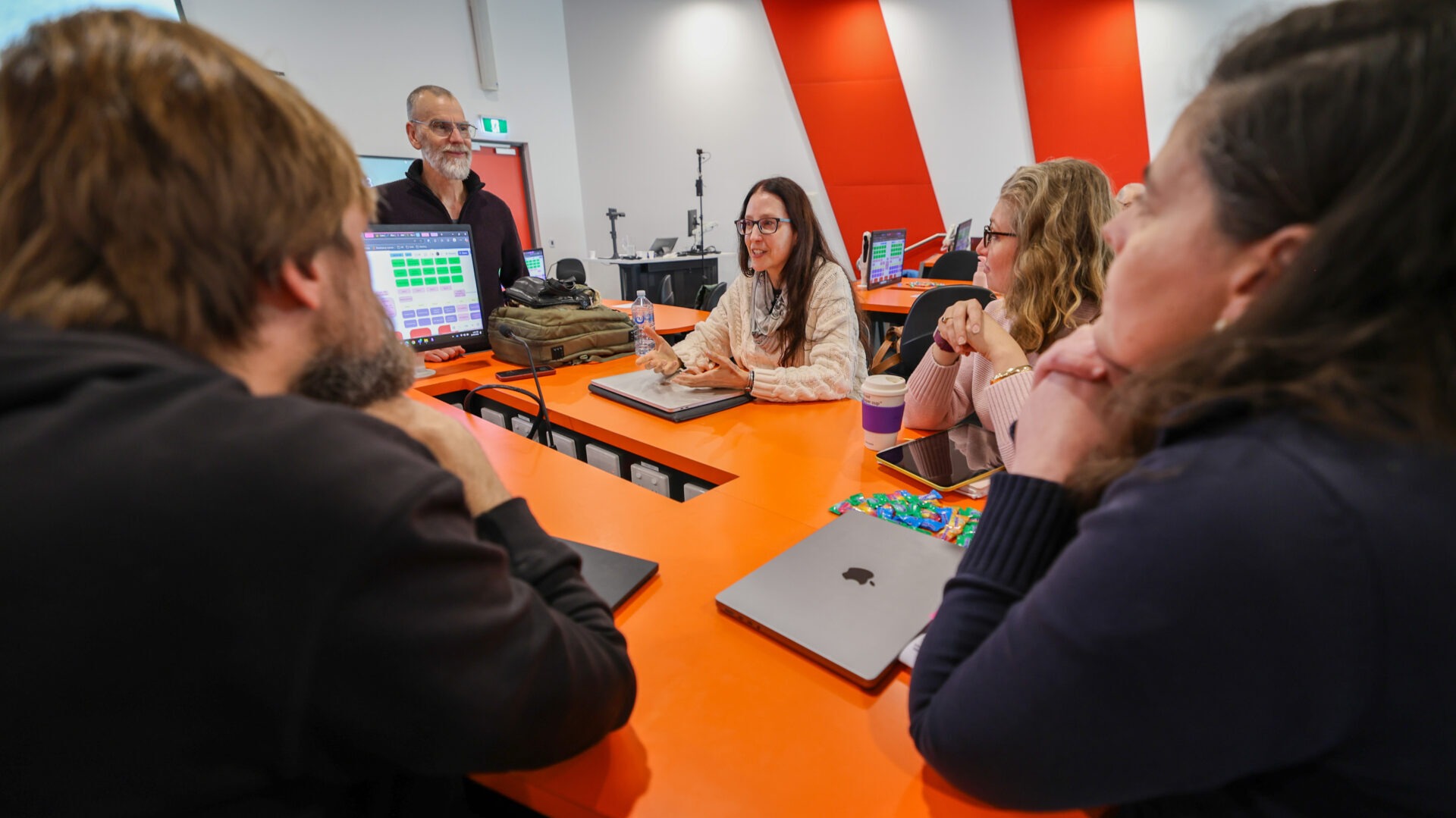
Curriculum in Practice: The I&E Major Model
The University of Newcastle’s I&E major is a pioneering example of AI-first curriculum design. The program incorporates AI from first-year courses through to capstones, including units on:
- Design Thinking and Creativity in Action
- Entrepreneurial MakerSpace
- Prompt Engineering for Innovation
- Social Entrepreneurship and Digital Strategy
- Global Negotiation and Venture Acceleration
Each course includes assessments that require students to use AI tools like ChatGPT for idea generation, feedback, and iterative design—while also reflecting critically on the process.
This intentional, scaffolded approach has led to higher engagement, stronger student reflection, and improved learning outcomes. It also equips students with workplace-ready skills in AI collaboration, creative problem-solving, and ethical reasoning.
A Framework for Human-Centric AI-First Teaching
Verhoeven introduced a pedagogical framework developed in collaboration with Dr. Tim Hor, aimed at embedding GenAI across all stages of teaching and learning:
| Phase | What Happens | Who’s Involved |
| 1. Preparation | Align learning outcomes with AI-supported exercises, assessments, and resources | Teacher + AI |
| 2. Personalised Learning | Students explore content, use AI for ideation, drafting, or reflection outside of class | Student + AI |
| 3. Classroom Engagement | Teamwork, presentations, experiential workshops with AI-assisted feedback | Teacher + Student + AI |
| 4. Assessment | Students submit outputs with AI reflection; AI may assist with marking or feedback | Teacher + AI (with oversight) |
Redefining the Role of Educators
One of the keynote’s central messages was that AI is not replacing educators—it is changing what educators do. Routine tasks such as content delivery, standardised grading, and summarisation can be automated. This shift frees academic staff to focus on the less automatable dimensions of teaching: human connection, ethical mentorship, and personalised learning support.
Educators must evolve from content deliverers to strategic coaches—guiding students in how to use AI critically, how to develop a personal voice, and how to apply learning in real-world, ambiguous contexts.
Assessment in the Age of AI
Verhoeven advocated for a reimagining of assessment practices. Traditional written assignments are increasingly vulnerable to undetectable AI-generated content. Instead, assessments should:
- Focus on students’ ability to prompt and guide AI
- Evaluate how students integrate, critique, and improve AI outputs
- Include AI-interaction logs, reflective commentary, and peer-reviewed co-creation processes
These practices maintain academic integrity while embracing innovation.

Applying These Principles at ANU
For teaching staff at ANU, this keynote offers both a challenge and an opportunity. As a research-intensive university with global reach, ANU is well-positioned to lead the development of responsible, future-focused AI pedagogy.
Suggestions for practical application include:
- Supporting staff development in GenAI prompting, ethics, and design
- Redesigning a weekly task or tutorial activity using GenAI
- Piloting reflective AI-based assessments in semester-based courses
- Developing faculty-wide AI competency maps across year levels
Final Reflections
Verhoeven’s concluding message was clear: the university of the future must be a place where human creativity, ethics, and judgment work in tandem with artificial intelligence.
“The world doesn’t need perfect ideas. It needs bold, curious minds willing to explore, experiment, and imagine the impossible—with AI as a co-pilot, not the driver.”
As GenAI accelerates change across disciplines and industries, ANU’s learning and teaching community has a vital role to play in shaping the capabilities, ethics, and values of its graduates.
View/Download presentation slides


More support and ideas
This wrap up post was created from the transcript of the workshop with the assistance of AI (ChatGPT)